


)
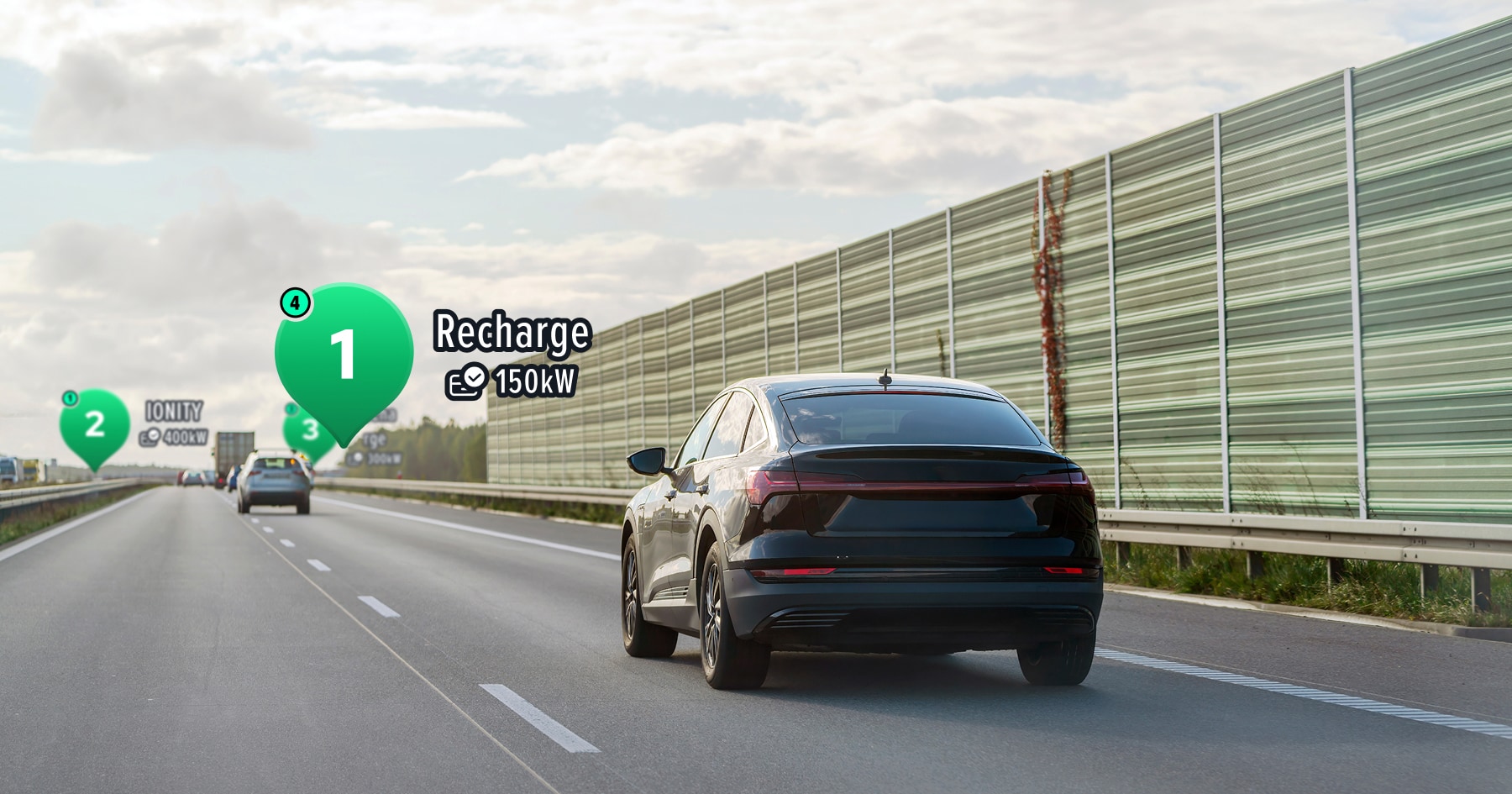
Two years ago, TomTom published an ambitious roadmap for how it would support the rapidly evolving electric vehicle market. A lot has changed since then — in the market, in the technology and inside TomTom itself. Drew Meehan, whose remit has grown from an EV specialism to the full spectrum of destination and in-car services, reflects on what the company has achieved, where the industry is heading and what TomTom is building to support it.
A transforming marketToday’s electric vehicle industry is unrecognizable compared to the one that dominated headlines five years ago. Mass adoption is no longer speculation — it’s happening. Across Europe, EVs (BEV and PHEV) now account for close to 30% of new car sales on average, battery EVs alone account for 20%. The Netherlands has surpassed 40%. Norway is in a category of its own, with EVs comprising over 97% of new vehicles sold. Similarly, charging infrastructure has boomed, with the number of public chargers doubling over the past four years. The anxieties associated with limited range and poor charging infrastructure are becoming a thing of history. But that’s not to say the job is done.
As the market moves from early adopters to the mainstream majority, the focus falls on serving a vast and growing population of EV drivers — while building confidence among those still to make the switch. Since its first started drafting its EV vision more than five years ago, TomTom has been preparing for this moment. It's an expected, but no less pivotal, inflection point: for adoption to continue, the way the industry thinks about EVs and their drivers must evolve.
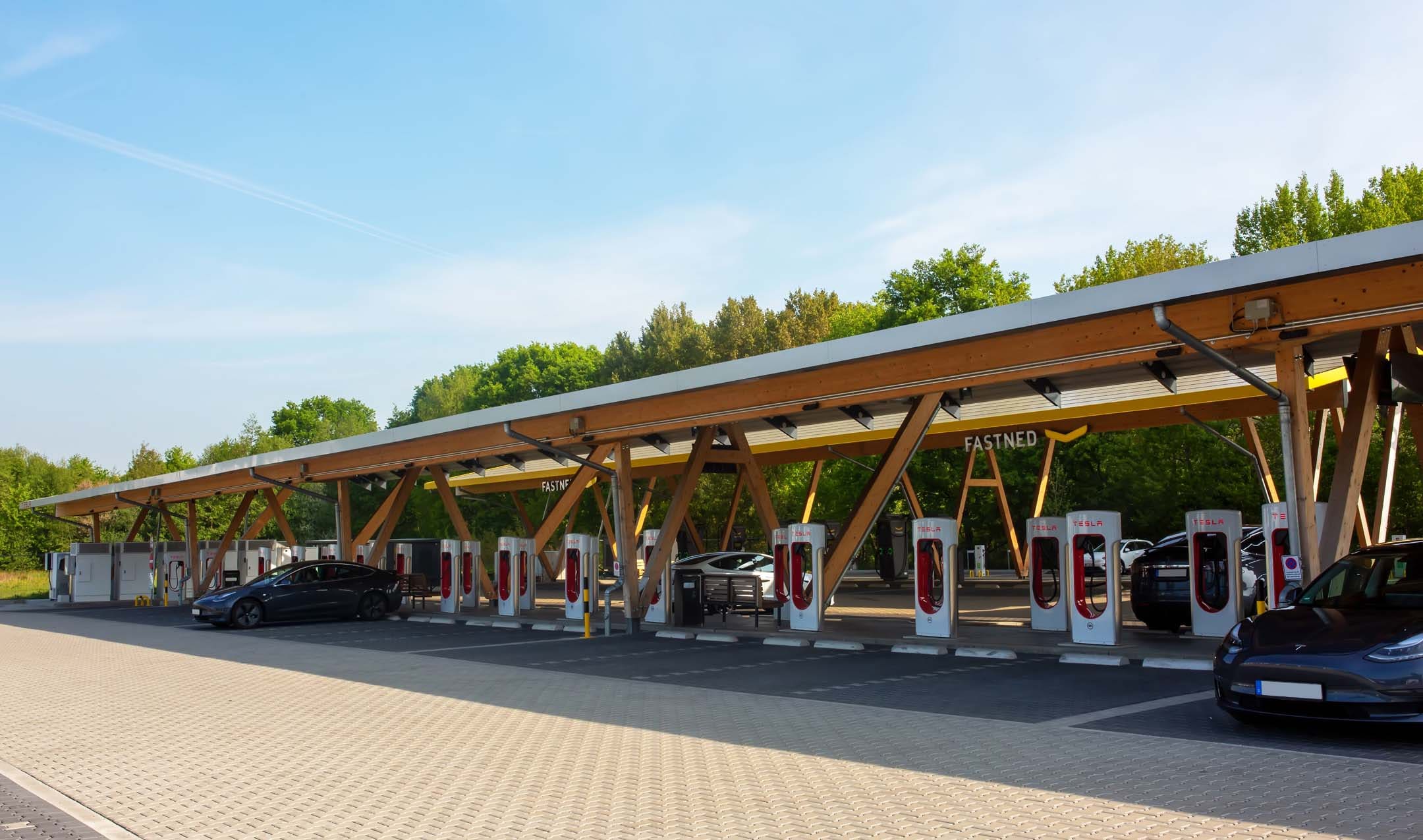 Fast charging stations like this are much more common, making long trips easier.From vision to reality
TomTom’s vision was simple, to make going electric as easy as possible. And, through the use of maps and location data, it believed it could achieve that. The first steps were to make range and charging anxiety a thing of the past.
Over the past two years, TomTom has overhauled its EV charging point of interest (POI) data, introduced more granular driver preferences for routing and charging, unified its search and routing stack for improved EV-specific navigation, launched availability profiles for charging stations and added live pricing. User feedback mechanisms for correct charger data is currently being built and will follow soon.
“We had this EV vision that we created then made public two years ago. And we’ve done the things we said we would do,” says Drew. “We added all these new preferences and functionalities to our EV products to help drivers charge when and where they want. And we’re still going, adding ratings and reviews [for chargers] very soon.”
TomTom now covers well over two million EV chargers globally, with solid representation across North America, Europe and more recently Southeast Asia and Korea. According to Drew, “In the places that matter most to our customers, we’re often better than the competition. Across the whole world, I would feel confident saying that the global leaders in EV POI data are now at parity with each other, TomTom included.”
TomTom has reached that position through what Drew calls a “super aggregator” model, working with best-in-class regional data partners rather than connecting to every charge point operator individually. It’s designed for speed and scalability and allows TomTom to extend its coverage into new markets quickly and efficiently.
Alongside coverage, the depth of data is crucial. Availability profiles — built from six weeks of rolling usage data, applying the same methodology TomTom uses for historic traffic flow — lets drivers see how busy a charging point is likely to be when they would arrive. Other data like reliability scoring, amenity information and pricing complete a picture that goes well beyond whether a charger simply exists.
Seen together, these improvements make a significant difference to the EV driving experience. EV drivers can now leave home in the morning, with no prior preparation, and undertake a long journey without any worries about where or when they'll charge. For those who want to plan in more detail, TomTom gives them a clearer picture: where to charge, when a charger might be available, what alternatives are nearby, what else is in the area, how much it will cost and how long it will take.
"Taking the friction out of driving and owning an EV is crucial, not just for TomTom, but for EV as a whole, for the sustainability of the world and for the future of driving," Drew says. "It's what continues to motivate our vision for electric vehicles."
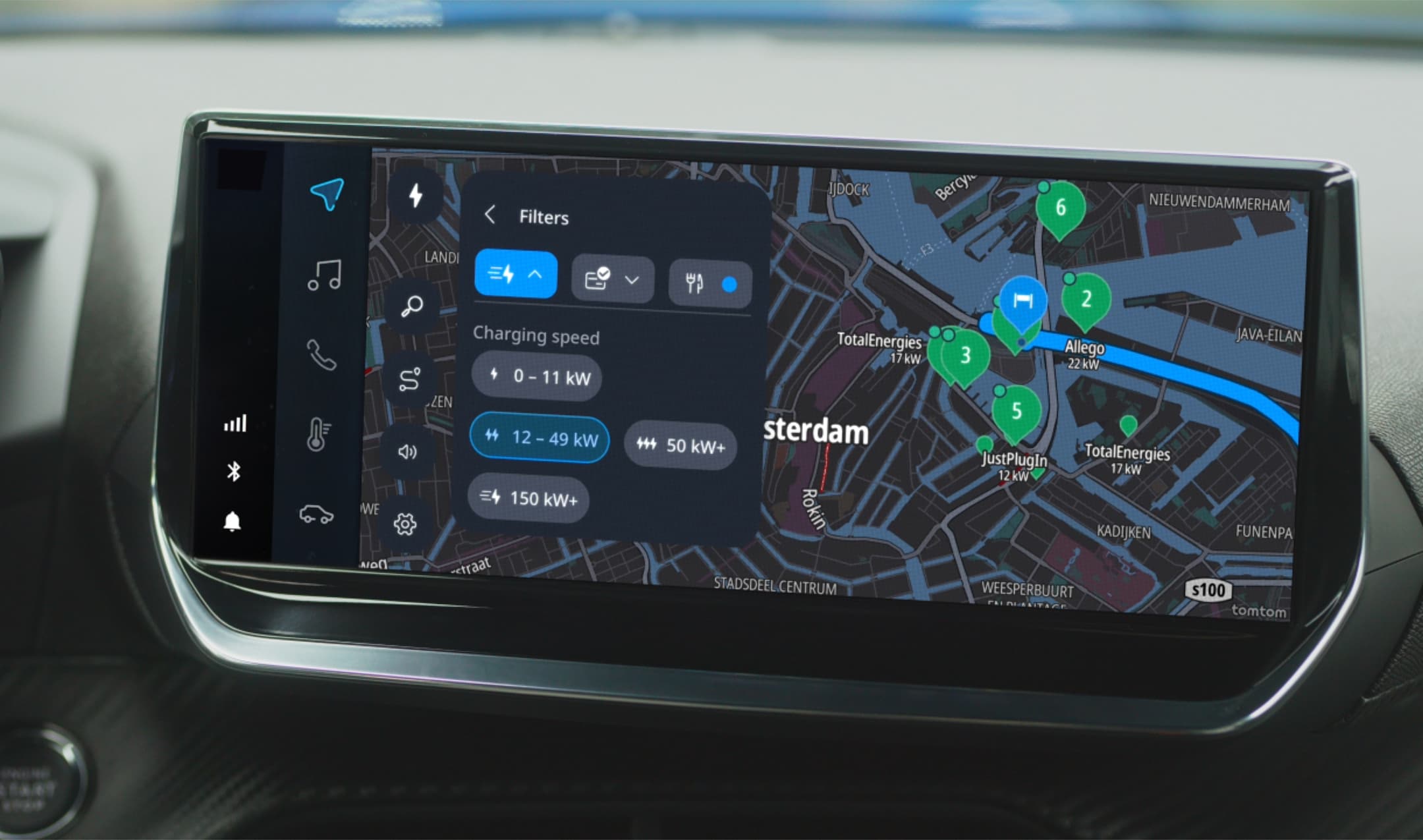 Being able to find a charger from your driver's seat is a baseline expectation for EV drivers.Expanding the mandate in an expanding market
The shift towards EVs as the automotive mainstream is reflected in TomTom’s revised organizational structure too. Drew's team — now Destination & Waypoint Management — covers EV charging, POI search, fuel and charging prices, parking, in-car transactions and their integration into TomTom's AI-powered platforms, such as TomTom AI Assistant, Agents and the company’s intelligence layers that provide additional knowledge and context for agents.
Previously, the team focused efforts specifically on EVs but is now contributing to a much broader set of driving experiences. EVs were built around a digital foundation from the start, which meant they surfaced many of the needs now shaping software-defined vehicles: smarter trip planning, richer location context, real-time data, personalization and services that respond to the driver in the moment.
Take complex, long-distance trip planning. For EV drivers, it had to account for regular charging stops, charger availability, amenities, route efficiency and range. But the same underlying capability is useful beyond electric driving — for a family planning a vacation, a driver mapping out a multi-day road trip or someone choosing stops based on dining, restrooms, parking or accessibility needs.
EV has served as a proving ground for in-car technology. Charger selection, amenity search, in-car payments, multi-stop routing and unplanned-stop support were built around the demands of electric driving. Now, the logic and tooling behind them can be extended across vehicle types, use cases and TomTom’s broader range of products.
The shifting shape of EV demandTomTom's original vision was built around a simple prediction: that as charging networks expanded and range anxiety receded, EVs would become less something to manage and more something to simply drive — as easy to live with as the vehicles they’re replacing. That prediction is becoming a reality, not only thanks to the work TomTom is doing in the car but also due to improvements in the broader EV ecosystem. However, as the industry continues to grow, new challenges arise.
New EU policies under the Alternative Fuels Infrastructure Regulations (AFIR) have pushed operators to place fast chargers at regular intervals along major motorway corridors, networks such as FastNed, Electra and Ionity are becoming household names.
Along with TomTom’s EV products, advances like this are making the electric in-vehicle experience simpler and less anxiety inducing. Not only are there more chargers, but drivers have more accurate range calculations, EV-optimized navigation and richer context on availability.
 Why can't charging be as idyllic as this?
"The idea is that drivers want to choose when and how to charge, they want to be able to get in their car and go — much as they have done for years. That’s been our motivation so far," says Drew. "But when that's achieved, drivers' desires will shift towards additional functionality, finer detail, greater refinement and more granularity in the information we serve them. And that goes for all vehicle types and their drivers, not just EVs."
Now that basic desires have been satisfied, drivers want more. They want fuel and charging prices. They want payment integration. They want to know what else is near their planned stops — somewhere to eat, a place for their children to play during a charge, reliable WiFi for a business call. They're asking about security lighting around chargers and covered parking for bad weather. For TomTom, the next phase in EV adoption is about supporting choice, not just access.
“Drew Meehan
Product, Destination and Waypoint Management
Looking further ahead, Drew expects vehicle-to-grid and vehicle-to-load technology to become a bigger part of EV ownership. Cars will increasingly act as home batteries, feeding energy back into the grid when plugged in or used to power devices while you’re out and about. It's a cost-effective way to build grid resilience, deliver personal energy security and get more value out of an EV — but the experience must work flawlessly to earn driver trust. If someone wakes up to find their car at 15% before a long drive because it fed the grid overnight, they won't use the feature again. Drew and his colleagues are paying close attention to these kinds of developments to ensure they’re meshed seamlessly into the EV driving and ownership experience.
There is still work to be done in the industry to make everyday charging easier for a greater number of drivers. Slow charging — the kind used while parked at work or at home overnight — has not progressed to the same level as fast-charging. Pressures to go electric are rising, and so are the costs of fast-charging on motorways so for EV ownership to truly work for everyone slow charging needs to be accessible to all.
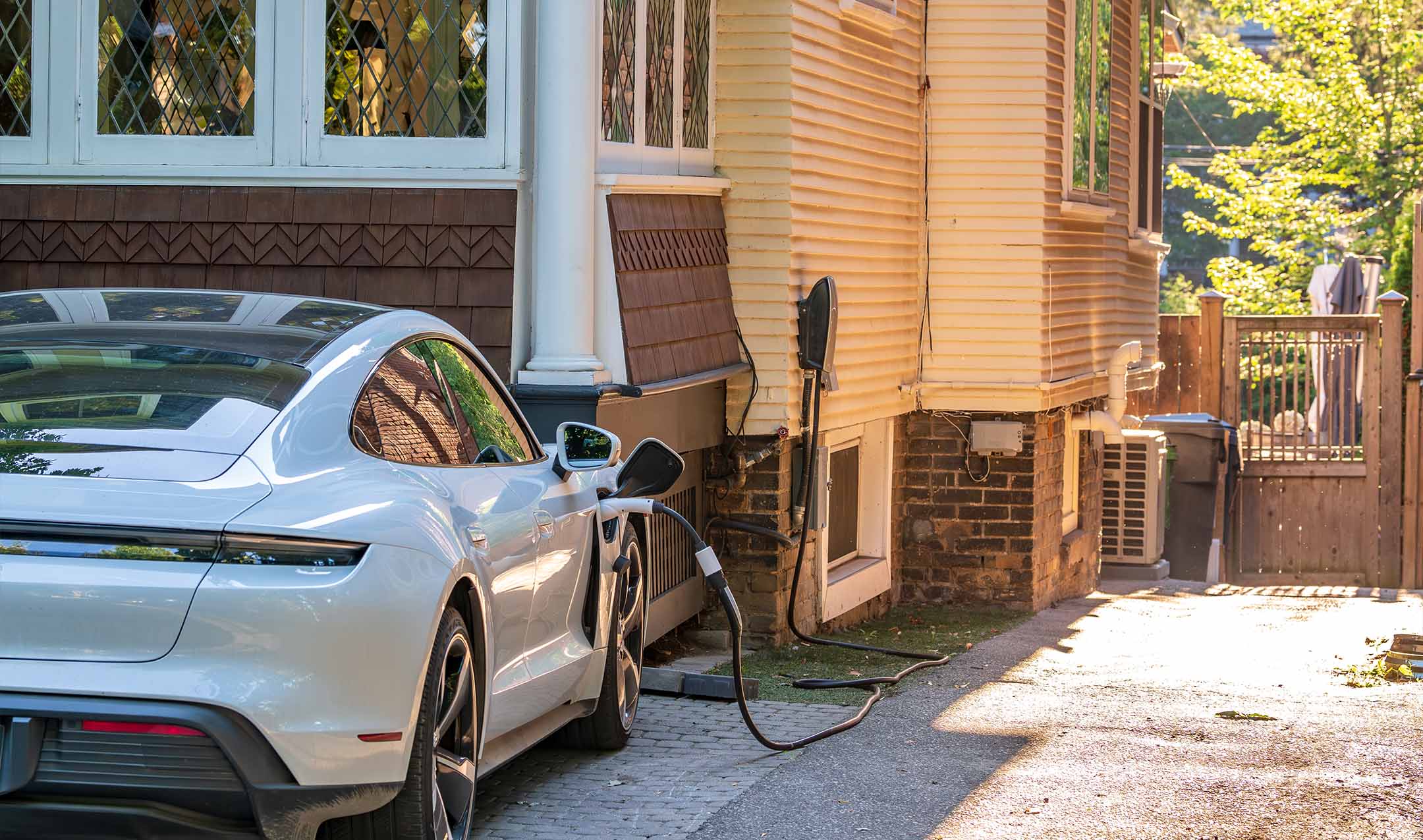 In the world of EV driving, those that can charge at home whenever they please are the lucky ones... for now.
"Complete adoption can only happen when slow charging is readily accessible and easily managed for everybody, there’s work we continue to do to make the in-vehicle part of that experience simple and easy, but infrastructure needs to improve too."
EV driving may have gotten easier; EV ownership is still catching up.
Where next for TomTom’s EV vision?TomTom believes the answer to the remaining in-car complexity of EV ownership is to meld its location data with an AI-based service that learns from a driver's habits over time, anticipates likely needs and helps manage the vehicle day to day. It would also support moments when routines change — unexpected journeys, longer trips and sudden detours — by adjusting recommendations around charging, range and timing.
TomTom already has its AI-powered in-vehicle assistant, which can handle complex conversational prompts: navigational queries, charging requests and prompts to message contacts with your arrival time. This new, additional layer of intelligence would work in the background, anticipating needs before they arise, ensuring the EV is used as efficiently as possible and never leaves its driver stranded — before, during or after a journey.
Think of TomTom AI Assistant as the part that interfaces with the human driver, the intelligence layer is what reasons in the background and makes decisions for the driver.
The main scenario Drew describes is straightforward but complex to create: the system would know from observed patterns that "this person is most likely going to work at 8 a.m. tomorrow, so make sure the car is charged." Or, "this person usually doesn't drive on Tuesdays, so use that day to charge from solar." Or even, "the driver has a week-long vacation planned in their calendar — make sure the car is fully charged every day over the course of that week."
"There will always be a level of manual override to everything that we're doing, and drivers should always have that option," Drew says — a principle that has run through TomTom's EV thinking from the start. The driver should always be able to choose, but they shouldn't have to invest mountains of time managing their vehicle.
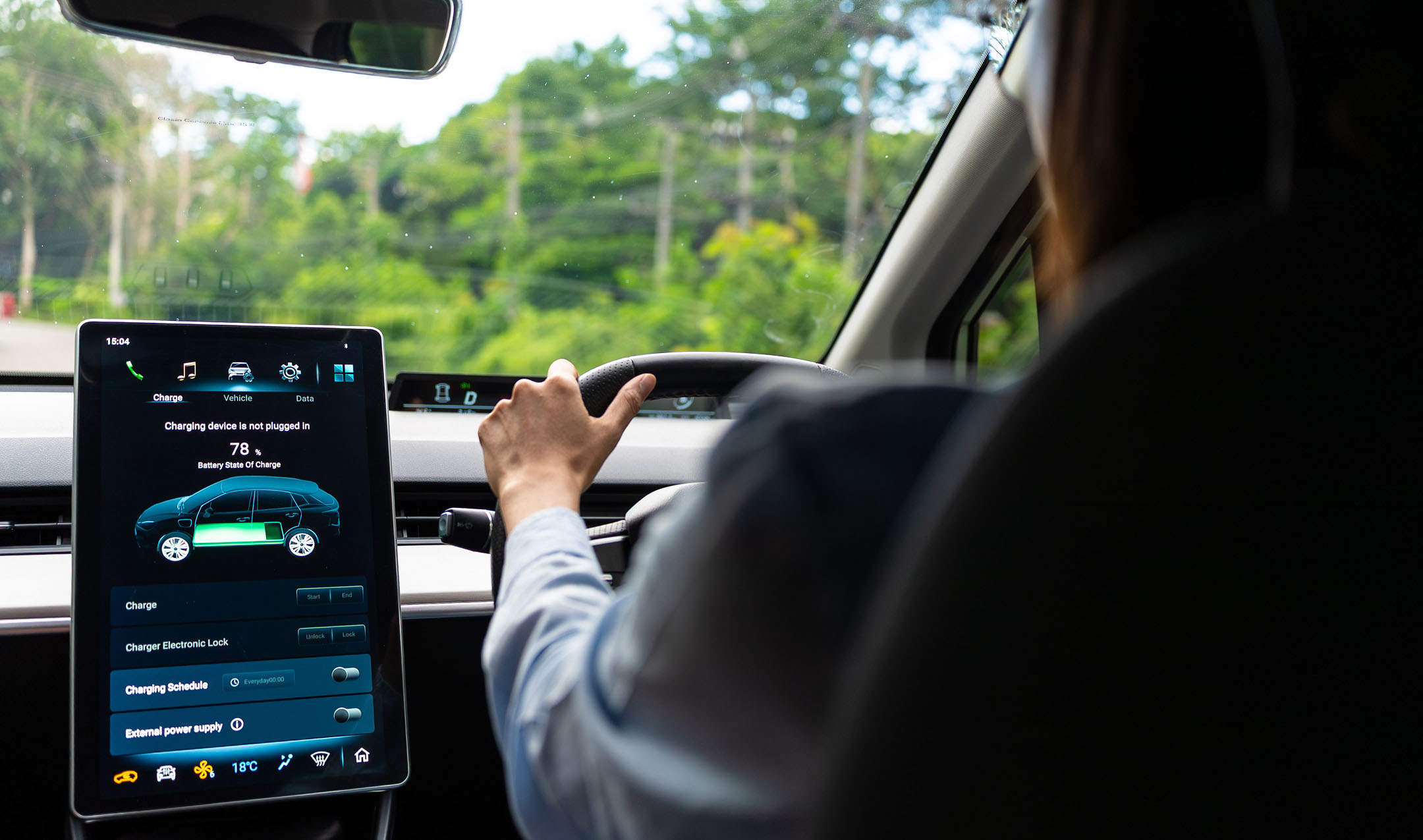 In-car EV features have come a long way over the past five years, but as the market continually changes, there's always work to be done.
One of the features Drew is most excited about improving with this intelligence layer is battery range predication. By transitioning from multi-variate equations to AI-based learning models, TomTom will be able to give drivers far more accurate information about how much further they can drive. Current models work well but can struggle with the dynamic realities of real-world driving. AI-based models train on actual usage data, learning how factors such as weather, a roof box, towing, lower tire pressure, open windows and individual driving style affect energy consumption. These advancements are on track to arrive by the end of the year as part of a new and revised API.
“Drew Meehan
Product, Destination and Waypoint Management
As EVs move into the mainstream, the experience needs to move with them — built around the driver, not just around the infrastructure. The goal is clear: make EV ownership feel remarkably unremarkable. Getting there will depend both on what the broader industry delivers and what TomTom can build — more accessible slow charging, greater affordability and experiences that continually earn the trust of the mainstream driver.
It may mean that the day job gets more complicated for people like Drew, but for the everyday driver, EV ownership should get much easier.
People also read
)
Grounding for the age of AI: Orbis powers the next phase of intelligent tech
)
TomTom Orbis APIs are now in general availability
)
How traffic intelligence supports cities in hosting major sporting events
)
Build a full navigation experience in minutes with TomTom NavSDK
* Required field. By submitting your contact details to TomTom, you agree that we can contact you about marketing offers, newsletters, or to invite you to webinars and events. We could further personalize the content that you receive via cookies. You can unsubscribe at any time by the link included in our emails. Review our privacy policy. You can also browse our newsletter archive here.