


)
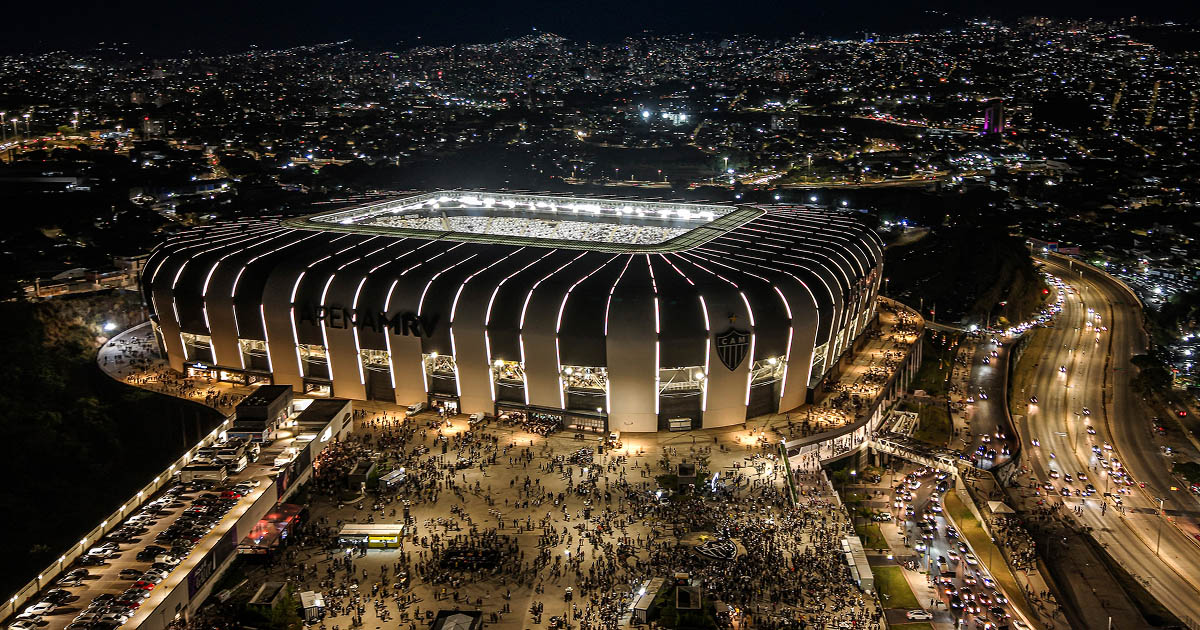
Major events probably bring to mind packed stadiums, flooded fan zones and busy streets. But while all eyes are on the event, transportation professionals are watching the roads. For them, event traffic is the main event — the biggest real-world stress test of the city’s mobility network. Whether it's a World Cup, Olympic Games, music festival or a large cultural event, these moments put extraordinary pressure on a city’s entire mobility system. They concentrate demand in specific places and at specific times, creating conditions that reveal the weak spots where the cascade of dreadlock begins. And in doing so, they often uncover opportunities for improvement that are harder to spot during everyday operations, but can have a lasting positive impact if improved.
As thousands of visitors descend upon cities, unfamiliar with local travel patterns, unexpected strains are placed on transit systems. Road closures, diversions, temporary public transport schedules and security measures change how visitors and residents move through the city. Demand can exceed typical peaks one hour and drop to record lows the next. While regular rush hour might be around 5pm, on event days, demand could peak at unexpected times like 1pm.
Managing these conditions requires atypical coordination across multiple agencies and organizations to balance the needs of residents, businesses, visitors and emergency responders. For transportation agencies, these events expose how smoothly a city’s mobility system functions, making them valuable opportunities to understand network performance in a new light, giving insight into resilience and operational readiness.
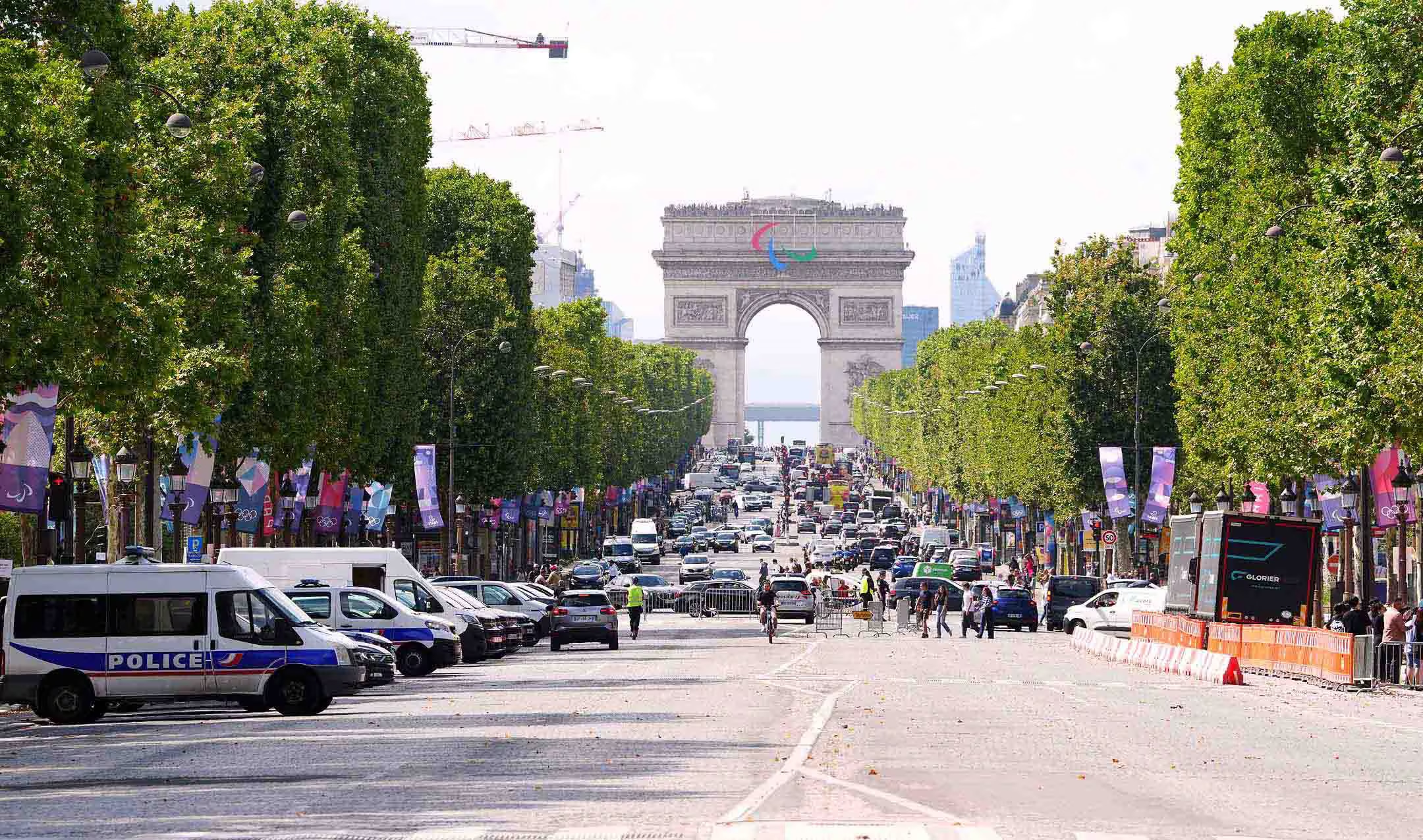
Planning for successCities start planning and preparing months, if not years, in advance of major events. Take, for example, Paris — the host city of the 2024 Olympics. With the city being notorious for congestion and slow-moving traffic, Parisian authorities saw the Olympics as a chance to accelerate plans to turn it into a greener, multi-modal, pedestrian-friendly city. Years before the opening ceremony, the famously car-centric city split the lanes among public transit, bikes and cars. Speed limits were reduced, 50 km (30 miles) of new bike paths were created and public transport was prioritized, making it the first time in Olympic history that all sporting events could be reached via public transportation.
Advance planning doesn’t just ensure smooth functioning during the event. In some cases, it can be a deciding factor as to whether cities get to host the event in the first place. As a city, proving that you can develop your transport network to provide capacity during such events can inadvertently become a tool for social and cultural development.
In a recent webinar on managing mobility during mega events, AECOM's Robert Edelstein stated that in the case of large-scale international events, such as the football World Cup, aspiring host cities must submit a mobility plan as part of the application. If they are unable to demonstrate an understanding of how people move through their city and present a plan to manage demand, they mightn’t be awarded the event.
Once a city has been awarded to host an event, the way it prepares reveals more than just how it's going to tackle the main event. It starts to pull back the curtain on how the city thinks about the future of transport, mobility and accessibility for its citizens.
Once a city has been awarded to host an event, the way it prepares reveals more than just how it's going to tackle the main event. It starts to pull back the curtain on how the city thinks about the future of transport, mobility and accessibility for its citizens.
For the 2026 Football World Cup that took place across 16 cities in three countries, each host city took its own approach to traffic and mobility management. Interventions ranged from expanding capacity to increasing walkability and connectivity.
Mexico City’s multimodal transportation update included an expansion of light rail and the construction of two new road corridors all designed and intended to function long after the tournament's final whistle. On the other hand, in New Jersey, with parking closed during the event, train prices rocketed with demand, leaving attendees to front unusually high prices with no local support.
Looking beyond the usual congestion hotspotsMost cities know their regular traffic hotspots — busy streets, dangerous corners. Major events, however, give rise to new, unexpected ones as infrastructure is stressed in novel ways. Roads that typically operate smoothly can suddenly become critical routes that traffic is diverted to. Intersections that handle everyday traffic without issues may become severely blocked. Due to traffic management measures, or people’s fear of mass delays, demand might fall on some days or roads, but might reappear in other places at other times. A study on changes in traffic demand during the 2020 Tokyo Olympics showed that while travel demand management measures reduced traffic demand by 2.9% on weekends, the ‘induced demand’ spilled over to weekdays, exceeding the reductions from other measures and causing a 4.6% increase in traffic demand on parts of the metropolitan expressway network.
Ahead of the 2026 World Cup final, TomTom predicted that traffic to and around the venue would spike two to three hours before the kick-off. The prediction, made using the same methodology as the yearly Traffic Index report, turned out to be true. On July 19, the day's single highest congestion hit a peak of 196.3% at 12pm — exactly 3 hours before the 3pm kick-off.
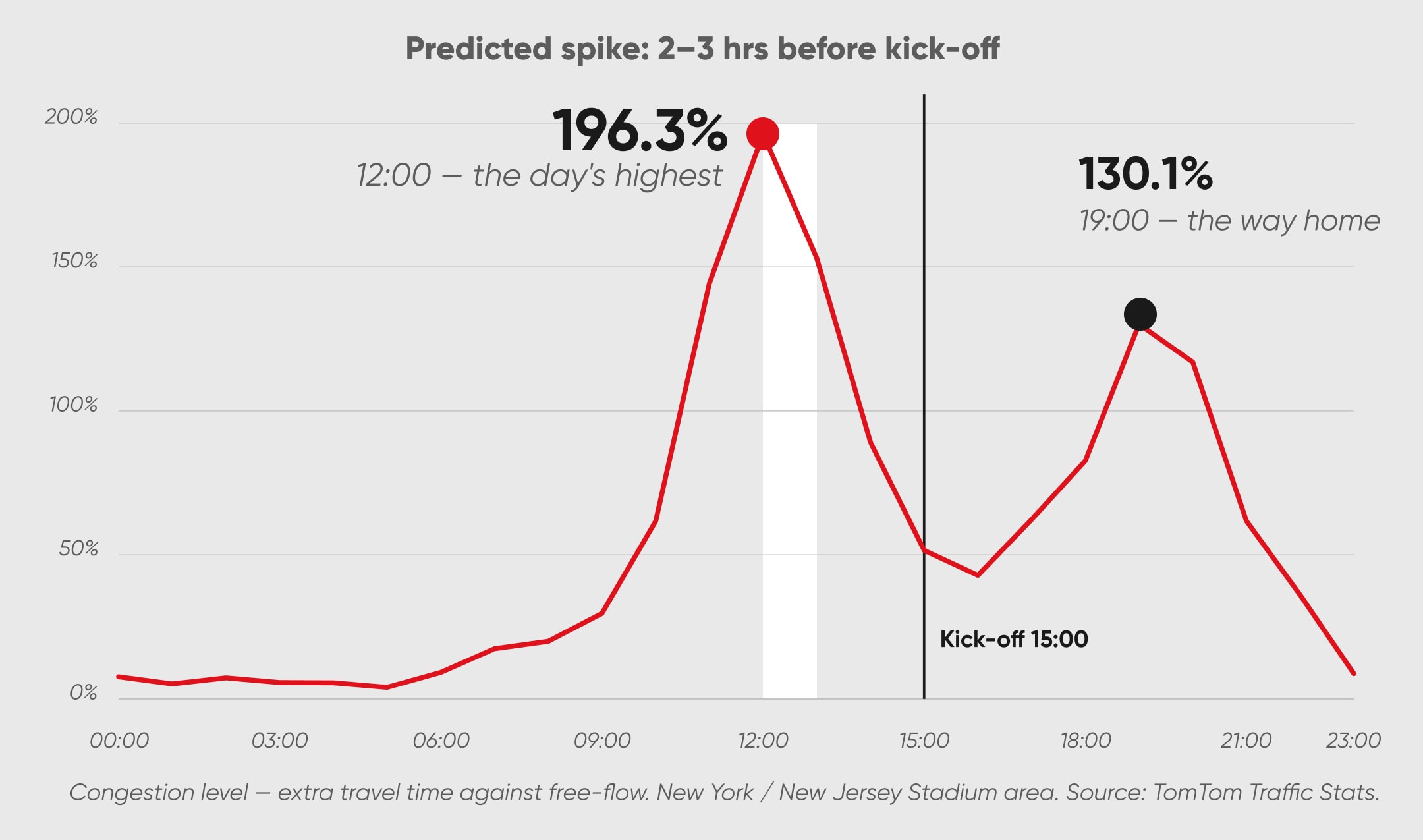 As predicted, traffic around the MetLife Stadium reached its peak of 196.3% three hours ahead of the World Cup final kick-off.
The only way to spot these patterns is with real-time and historical visibility over the whole city, so planners can see how disruptions spread through the network and how traffic has behaved in the past.
Coordination becomes a critical capability
Events on the scale of the Football World Cup require coordination and cooperation from multiple entities including stadium owners, security, safety, medical teams, transit providers and traffic authorities.
With AECOM helping to manage mobility during seven matches in Miami during the 2026 Football World Cup, Robert shares some learnings from the experience. To ensure smooth functioning during the event, agencies might have to take on evolving roles. Take, for example, law enforcement.
“They do a great job in terms of safety and security, but we had them flushing out the (traffic) queues by adjusting the signal timing in real time before and after the games,” he says.
He also mentions ride-sharing issues, when drivers were forced to drop passengers off at designated drop-off points rather than right outside the stadium. These passengers then had to walk to the nearest entrance to get into the stadium. The confusion with drop-off points also caused some ride-share shuttle buses to arrive late to the venue.
During events, small obstacles like a poorly communicated diversion can create ripple effects that extend far beyond the immediate area. In this case, Robert claims the command center set up at the venue helped mitigate these issues quickly.
“There, we had people from four different control centers and all of our different stakeholders. They provided real-time information to the event manager, so they could make decisions on how to manage the traffic, as well as crowd control.”
While traditional traffic models remain important, today's mobility teams have access to far richer insights than static models alone can provide. In the case of the World Cup and other large sporting events, AECOM has seen value in using high-quality data such as TomTom’s to inform AI prediction modeling tools to forecast traffic conditions and prepare accordingly. With these models based on historical and real-time traffic intelligence, agencies can evaluate diversion routes, assess the impact of closures, adjust signal timing and measure the effectiveness of mitigation strategies.
Lessons that last beyond the eventIn the same webinar, Replica's Nick Bowden noted a valuable lesson from the World Cup for mobility planning in the U.S.
Generally, stadiums and event venues in the U.S. build 40,000–50,000 parking spots to address demand. Having to handle parking and make sure things flow smoothly brings on a unique set of complexities for planners and event managers tasked with managing a large event in a particularly car-centric system. However, with the transportation planning for the recent World Cup focusing heavily on multi-modal transport, the number of these parking spots was significantly reduced across stadiums.
Many concerns about parking and vehicle access proved less problematic than expected when cities coordinated transit options effectively.
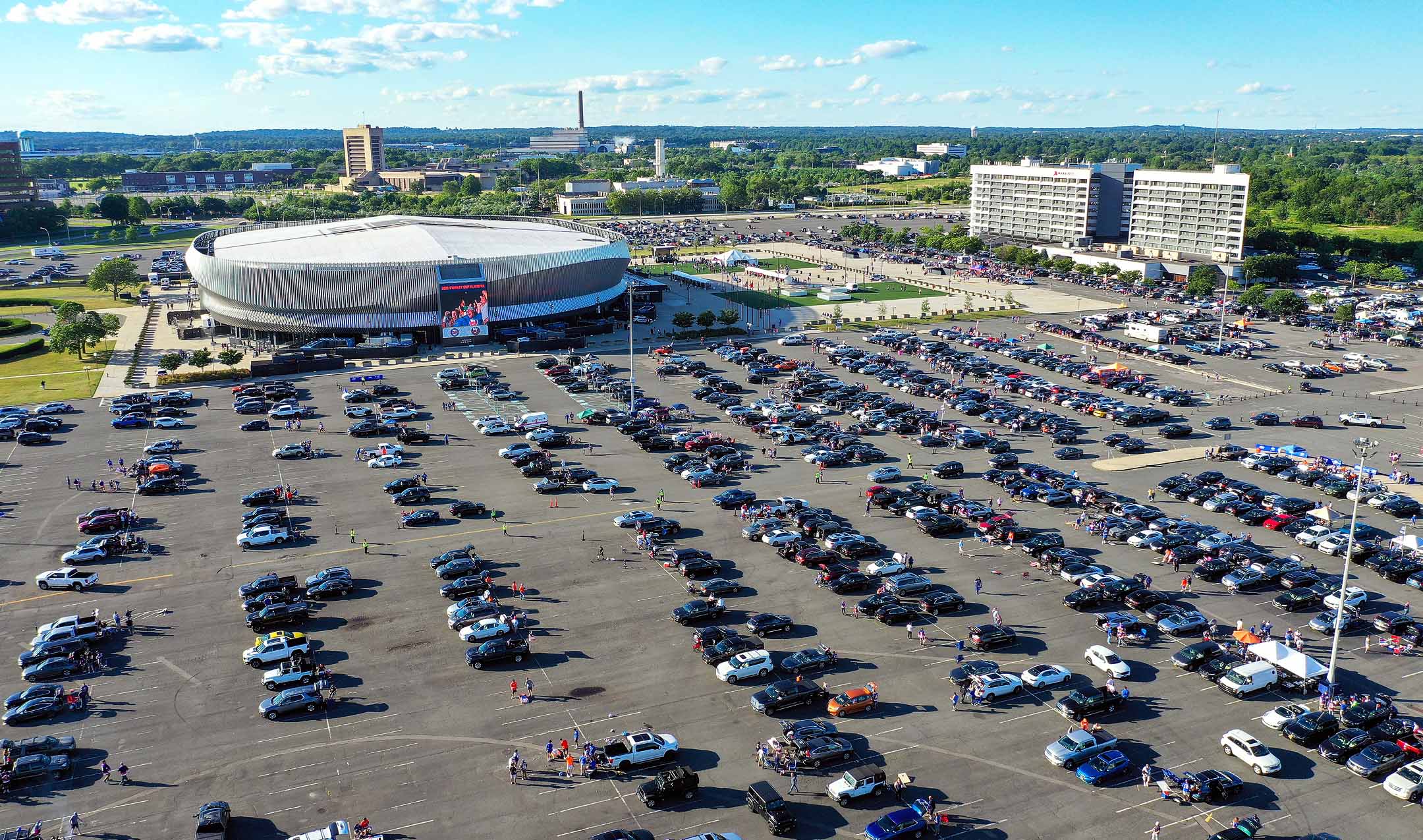 The 2026 World Cup showed that focusing on multi-modal transport during major events can ease reliance on cars and make it easier for planners to allocate space away from parking and manage congestion better.
“Turns out, you can actually do stadium design and stadium location placement or event-style location placement without having to accommodate 50,000 cars. For a lot of cities in the U.S. preparing for this (World Cup), that was their primary concern,” Nick says.
Without everyone being allowed to drive, demand will effectively be distributed across other modes of transportation. This insight points to a broader shift in urban mobility planning. Sometimes, managing mobility means incentivizing the public to make use of the infrastructure already in place.
If conducted well, such post-event analysis can help planners better understand how event-day traffic acted in comparison to a usual day, providing a clear picture of where interventions were effective and where additional improvements were needed. This can inform decisions for both future events and everyday operations.
Some challenges faced during large events, such as blocked junctions or insufficient communication, are often the same challenges residents experience every day, only magnified. Addressing them during large events could create lasting benefits for everyone who uses the network long after the event’s ending. In some cases, these events put cities on the fast track to uncovering patterns and insights that might otherwise have taken years to uncover. And the insights generated can shape transportation planning for years.
People also read
)
)
)
)
* Required field. By submitting your contact details to TomTom, you agree that we can contact you about marketing offers, newsletters, or to invite you to webinars and events. We could further personalize the content that you receive via cookies. You can unsubscribe at any time by the link included in our emails. Review our privacy policy. You can also browse our newsletter archive here.