


)
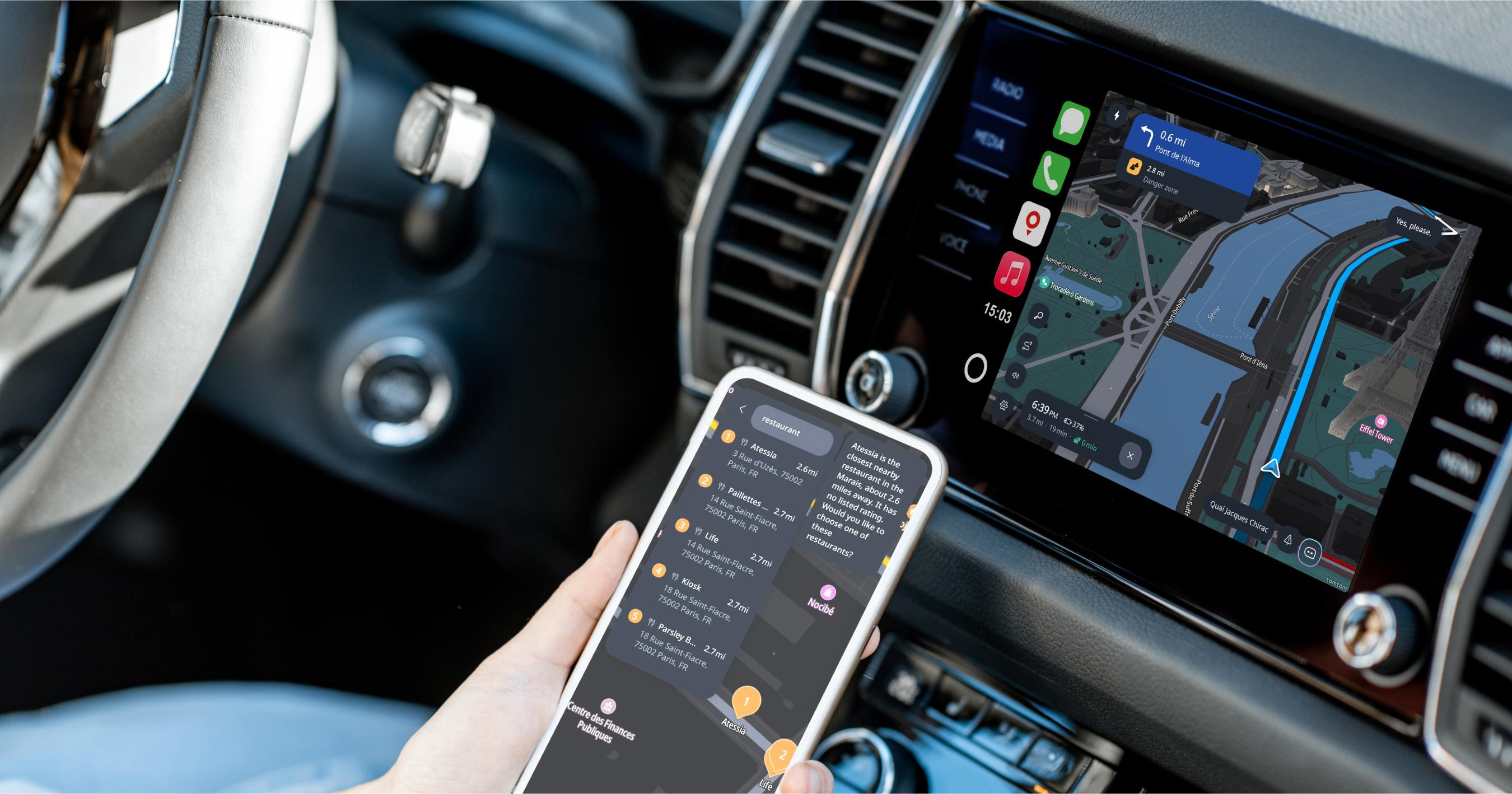
The modern car has a problem. Not with electrification. Not with automation. Not with navigation. Not even with connectivity. It’s deeper than any one feature alone. The modern car has a problem with comparison.
Today, every driver steps into their vehicle with a device in their pocket that defines how good technology should feel, look and operate.
The device is fast. It’s familiar, personalized and always improving. People and their phones are becoming inseparable, using them for more tasks, and holding on to for longer and longer, with every generation. Because of that, they are getting ever more deeply ingrained in our everyday lives.
“Everyone has a smartphone. It’s dynamic and always up to date. But most importantly, is deeply personal; it doesn't just hold a person’s navigation, it holds their whole digital life,” Paul Schouten, Senior Staff Designer TomTom, UX Concepts explains.
When in-vehicle infotainment (IVI) systems — especially their navigation apps and journey experience — don’t feel as intuitive, personal or responsive, the outcome is simple: drivers will reach for their phones.
For people like Paul, who build and design the in-vehicle experiences of the future, the phone has become a new kind of competition.

Good enough for a car is not good enough anymore
For years, expectations of in-vehicle technology were shaped by the automotive category itself. Automakers mainly benchmarked their systems against competitors in their class. But consumer tech, the phone especially, has changed that dynamic completely.
Today, IVI systems aren’t competing only with other cars. They’re competing with the broader technological experience economy, which is defined by devices like smartphones, apps and the platforms people use every day.
“Gianluca Brugnoli
VP of UX, TomTom
The issue is that the qualities drivers now expect from digital products — speed, personalization, responsiveness and constant improvement — are much harder to deliver inside a vehicle than on a phone. The IVI has to operate within a more complex environment, where safety requirements and disparate vehicle systems all influence what can be designed, deployed and maintained.
What’s more, vehicle systems must be made to withstand product lifecycles that stretch for years beyond what a typical smartphone would ever see. On average, people keep their car for twice as long as their phone. Despite all that, drivers continue to make comparisons between their phone and car.
Drivers tend to compare the two platforms based largely on features, apps and how they perform. But the complexity of building an IVI does not come from any one feature, or from trying to build features that directly compete with smartphone apps — those are relatively easy to do. Instead, the complexity is deeper and comes from the way the vehicle itself is built and structured and that it must serve a very different use case, in a different, and arguably more challenging, environment.
For the IVI to deliver what drivers want, many separate domains like navigation, entertainment, driver assistance, sensor feedback, connectivity and vehicle data, all need to work together in real time, to support the demanding task of driving. Without a shared foundation, they remain separate parts of the car, which do not act uniformly as one coherent experience.
Smartphones have raised the bar for what good technology feels like. But the challenge for IVI is not keeping pace with smartphone features. It is creating a driving experience that feels together, relevant and trustworthy despite the complexity beneath the surface.
The confidence gap and the context advantage
“Bart Baeklandt
Design Lead, Driving Experience, TomTom
In the car, confidence matters. If the IVI and its features feel unclear, incorrect, distracting, irrelevant or out of date, drivers will choose the alternative: the phone they know, trust and keep up to date. And with screen mirroring tech now commonplace, it’s an easy decision for many.
“With mirroring solutions like CarPlay and Android Auto, that personal navigation experience gets embedded right into the car's screens, removing the old pain points and downsides of phone holders and small screens,” Paul explains. This merging of devices has further blurred the line between the car’s purpose-built system and the phone.
That is part of what drivers love about screen mirroring. It doesn’t ask them to learn something new. It brings a familiar, constantly updated interface into the vehicle environment and lets them keep using services and apps they already know and trust, especially navigation.
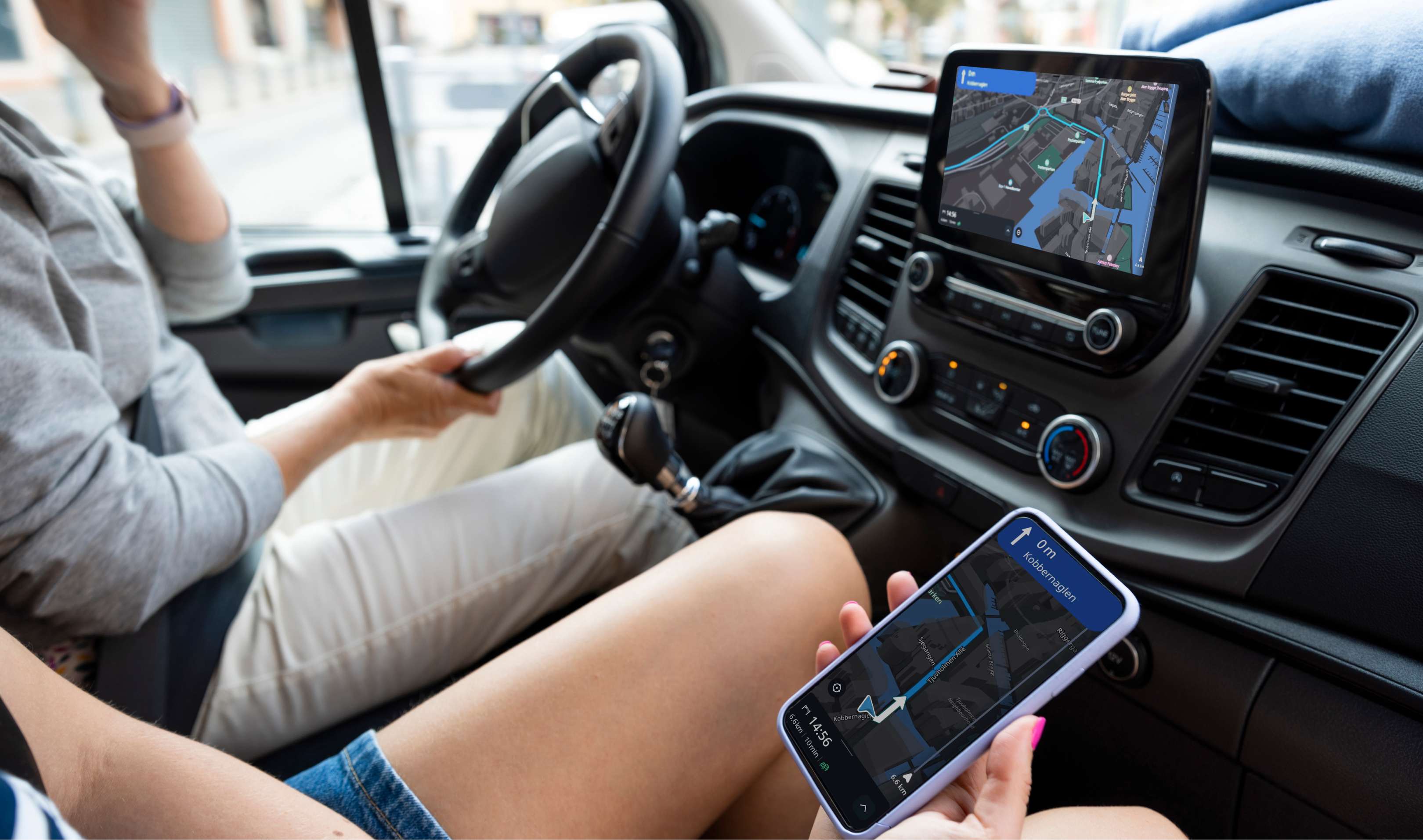
However, merging car with phone, while perceived by many drivers as a benefit, exposes the phone’s biggest weakness when used for auto navigation or as an IVI replacement; the phone doesn’t have the ability to turn journey, vehicle or spatial information into useful context and insight for the driver. The car, though, when its IVI is built on a common, software-derived foundation — which connects sensors, location intelligence and functionality — does have the power to do so.
For that, the car needs context. Context is key to delivering great experiences, but context cannot exist without the data it is built on: where the driver is, where they are going, what the traffic is doing, how much charge or fuel their vehicle has, what assistance systems are active, what ADAS perceives, how are conditions changing around them and so on.
When that data is plentiful, connected and interpreted well, the system can do more than just display — or mirror — content, as the phone does. It can understand the situation and respond in a way that is more timely, relevant and safe for the driver. It adds crucial context to enhance the experience. It transforms in-car information into driver-centric intelligence. As this happens, personalization and contextual understanding will become baseline expectations for drivers.
“For example, a personal in-car AI agent that truly knows me, my preferences, my appointments, my preferred routes... creates a far more tailored and relevant experience than the phone could ever achieve. It’s built on contextual understanding, and therefore data is key to building this level of intelligence,” Paul says.
The emerging AI benchmark
The need for domain specific context and personalization is becoming even more important as the phone begins to evolve once again, thanks to AI.
Smartphones are no longer only fast, familiar and always up to date. They are becoming AI-powered personal interfaces, able to summarize, suggest, generate content and respond in more natural ways. This is creating yet another point of comparison for the car and its IVI to measure up to.
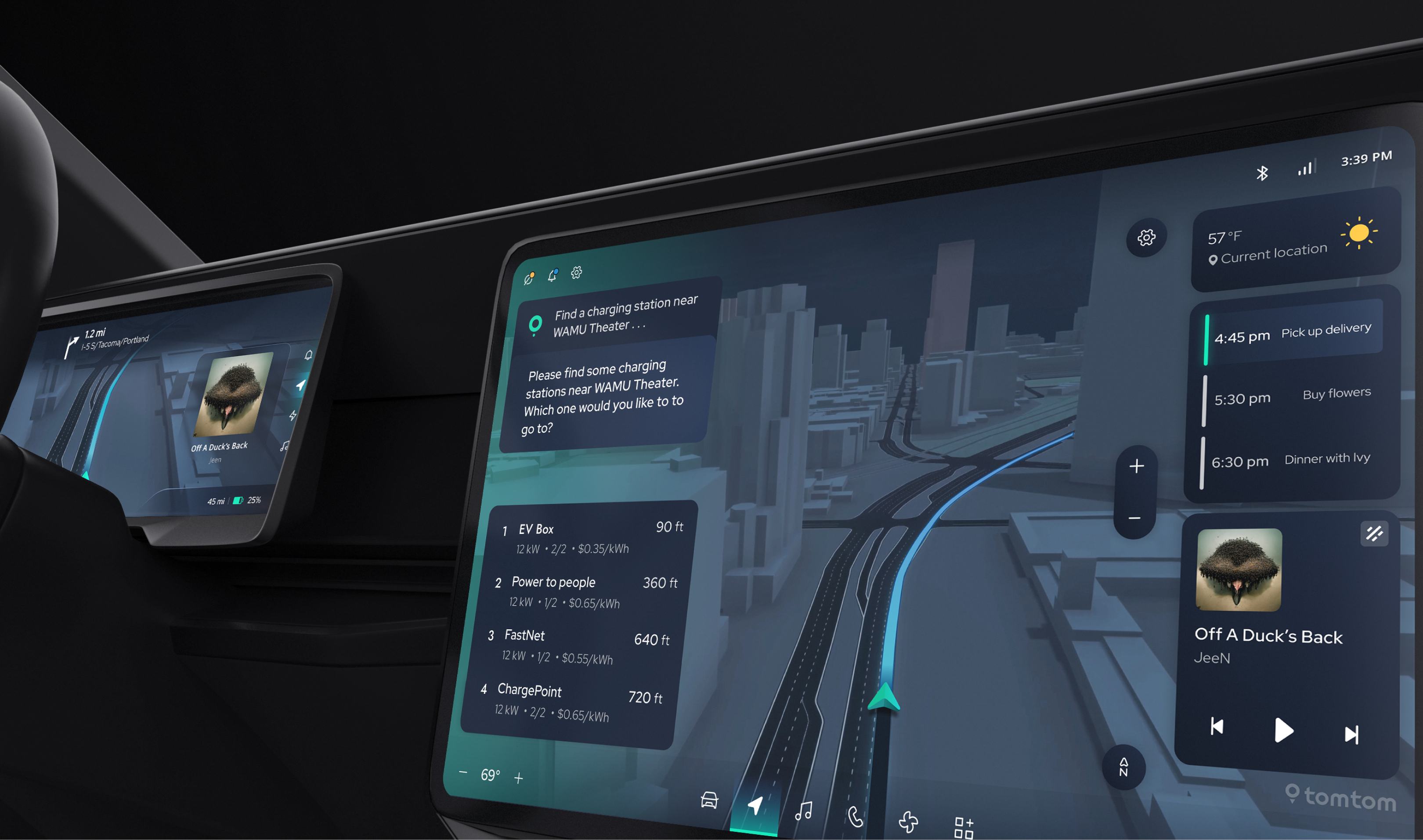
If drivers can ask their phone a broad, conversational questions and get useful answers, time after time, they will increasingly expect the same from their vehicle. Why can’t I ask my car what is happening on my route? Why can’t it explain whether I have enough charge? Why can’t it suggest a better stop or understand what I mean when I ask it to find a charger close to a restaurant?
This is widening the expectations gap. But this time, it’s not because the phone understands the drive better, but because it’s teaching drivers to expect more.
For automakers, this is both a threat and a significant opportunity. If IVI lets the smartphone define the standard, the car will always feel like it is catching up. But if the vehicle can use its own data, systems and driving context to support more intelligent interactions, it can offer something more powerful to the driver than the phone ever can.
The car can win
Indeed, the in-car experience has a trick up its sleeve, one that the smartphone can’t match: integration.
“Smartphones become the preference over in-built navigation when navigation is treated as a separate, independent block in the car. The opportunity with new software-defined and AI-powered architectures is to bring navigation, ADAS, infotainment and all of their interfaces together through a shared foundation of data and vehicle intelligence, so they become something much more holistic and contextual for driving than what you have on a smartphone,” Giovanni Giancaspro, Automotive Market Segment Manager, explains.
That advantage, however, is only just starting to be exploited.
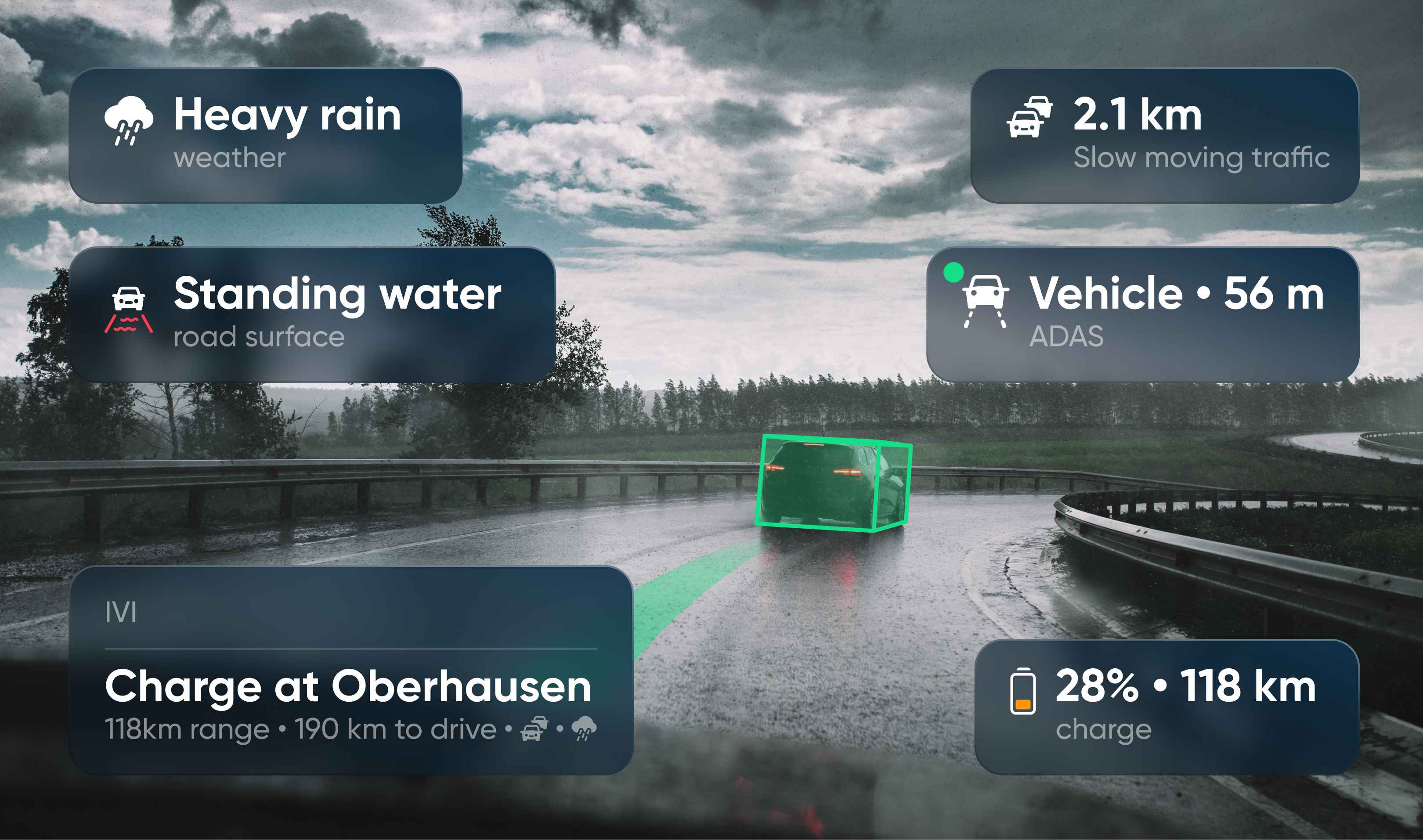
Traditionally, many in-vehicle systems are built and operated in pieces and do not share a structural foundation. Navigation, driver assistance and infotainment may each do their job well, but they often work as separate systems rather than parts of one coordinated whole. The issue is not that individual components or features are lacking. It’s that they do not always share a common understanding of what the driver is doing, what the journey requires or what the vehicle is already aware of — or, as Paul puts it, they lack “contextualization.”
However, that is beginning to change.
Software-defined vehicles, electrification and AI are pushing vehicle architectures toward deeper integration, more centralized compute and greater interoperability between systems and software layers, changing both how vehicles are developed and how drivers interact with them.
That shift gives automakers the foundation to move beyond collections of connected features towards something more useful: a vehicle that can interpret the whole driving environment and respond with greater intelligence, fully aware.
[READ: Investing where it counts: What the AI-defined era means for carmaking]
“Full contextual awareness means a genuinely intelligent system: one that understands me, my behavior and my needs, but also the bigger picture around the drive, from traffic jams and weather to useful places nearby,” Paul says.
“With more human-like interactions, it can understand my words, their tone and tempo, my body language and where my eyes are looking, and consider it all when responding.”
Delivering this will elevate in-vehicle systems to a point that will make smartphones feel like the dumb choice for driving and navigation.
“Together, it should start to feel like having a very knowledgeable friend next to me in the car. Someone who can guide me, knows the area, my car and importantly, also can sense when to remain silent,” he adds.
What’s coming next from IVI?
The next evolution of IVI will not come from surface level additions like more or better screens or adding more features and capabilities to navigation itself. It will come from something far deeper, a structural shift that allows the car to behave as one, holistic, connected system.
Navigation becomes part of the vehicle’s shared intelligence, connected to ADAS, sensors, traffic, charging, battery systems, driver preferences and the wider journey context. The map is no longer only there to show the route and point out directions. It becomes the location intelligence layer that helps the car, and driver, maximize and understand their journey.
A smartphone can know its user: their calendar, habits, favorite places and music. But it cannot know their vehicle with the same depth. It cannot understand the car’s state of charge, interpret its sensors, read the status of driver assistance systems or decide how information should move across the cockpit.
Phone-based navigation can support the drive, but it can never become the driving experience that people like Paul are building.
The challenge defined
For OEMs and carmakers, the goal should not be to copy the smartphone, mimic its interface or chase consumer tech trends. Their goal should be to create an in-vehicle system built around the moment that matters most: when someone is driving. Driver expectations should be met, but they should not define the entire scope of development.
The opportunity for IVI is to turn the vehicle’s own intelligence into an experience that is integrated, aware, useful in motion and designed around the reality of the drive — not around smartphone use.
Building that will be challenging, it will require combining automotive-grade reliability, consumer-grade usability and deep systems integration. It will also require partners that can connect navigation, location intelligence, real-time data, AI technologies and vehicle systems into something coherent for the driver. But with modern production ecosystems and the right partners, it’s possible.
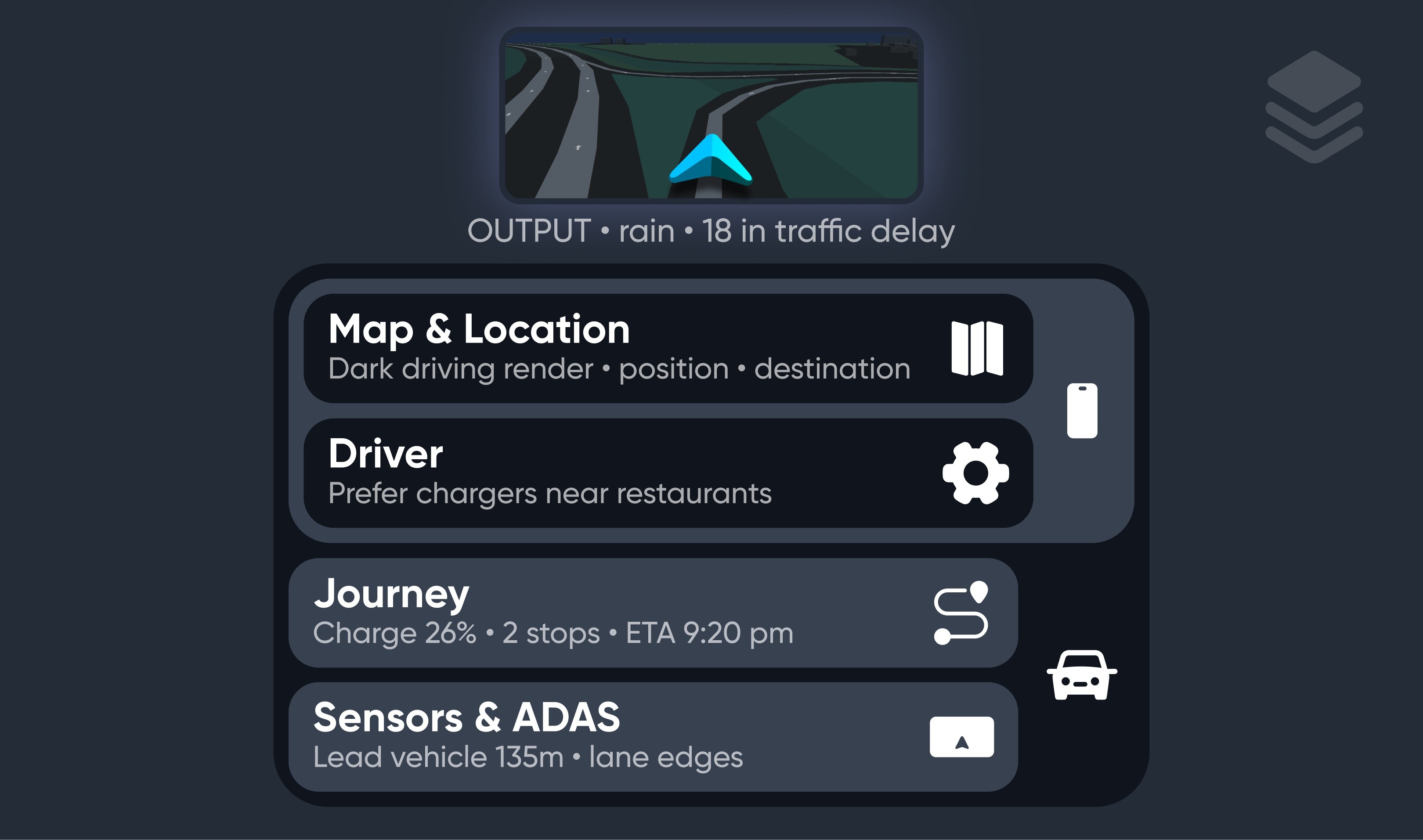 Indeed, building that experience does not mean building every layer of the vehicle's technology stack from scratch. Increasingly, carmakers are distinguishing between the foundational technologies that enable modern driving experiences and the parts of the experience that actually differentiate their brand. Location intelligence, environmental understanding and core software infrastructure are becoming shared foundations that connect systems across the vehicle. Building on those foundations allows automakers to focus their investment where it matters most: creating intelligent, seamless and distinctly branded experiences for drivers on higher levels of their stack.
People also read
)
From software defined to AI defined, the next vehicular evolution
)
From fixed machines to evolving platforms: The new challenge for carmakers
)
Investing where it counts: What the AI-defined era means for carmaking
)
There’s no such thing as mapless automated driving
* Required field. By submitting your contact details to TomTom, you agree that we can contact you about marketing offers, newsletters, or to invite you to webinars and events. We could further personalize the content that you receive via cookies. You can unsubscribe at any time by the link included in our emails. Review our privacy policy. You can also browse our newsletter archive here.