


)
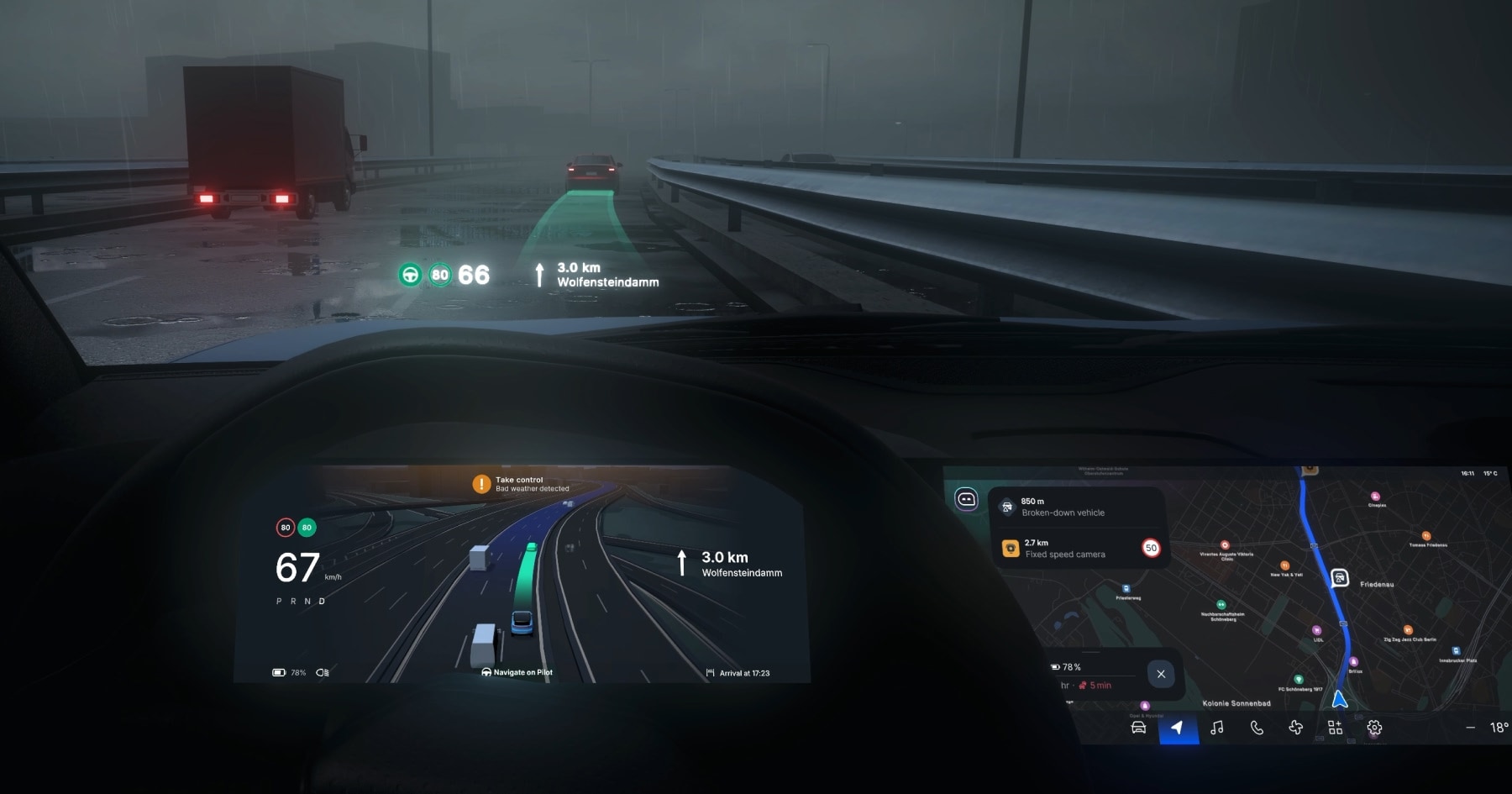
The automotive world doesn’t slow down. The technology shaping and driving the industry is ushering evolution after evolution. Vehicle software is levelling up, bringing us cars with machine learning, end-to-end perception models and more intelligent in-cabin technology. This is the dawn of the AI-defined vehicle.
The world of automotive moves fast, really fast. It was only a handful of years ago that we said, “Hello” to software defined vehicles. Ushered in as part of the continued advancements and refinements in vehicle engineering, and to some degree the move to electrification, software has become a key area of focus in vehicle design and development. But now, with developments in large language models, machine learning and neural networks, it’s artificial intelligence, AI, that’s becoming the hot new battleground of vehicle design.
Over the past decade, the automotive industry has moved steadily towards greater compute, electrification and automation. Disruption is the word on everyone’s lips. And with that, the processes and economics of how cars are designed and built have changed dramatically.
It’s no longer about the number of cylinders, exhaust notes or horsepower a car has. It’s about efficiency, smart engine management, electrification, refinement, in-car tech, connected features, modernity — the whole experience. It’s about how the car becomes part of, and improves, your life. Without the character-defining pieces of hardware seen in cars of old, the personality of a modern car has been forced to emerge elsewhere.
Software is that place.
A car’s codebase has become the central mechanism through which its characteristics, personality and performance are defined and expressed. It’s the vector through which a vehicle can improve over time through over-the-air updates.
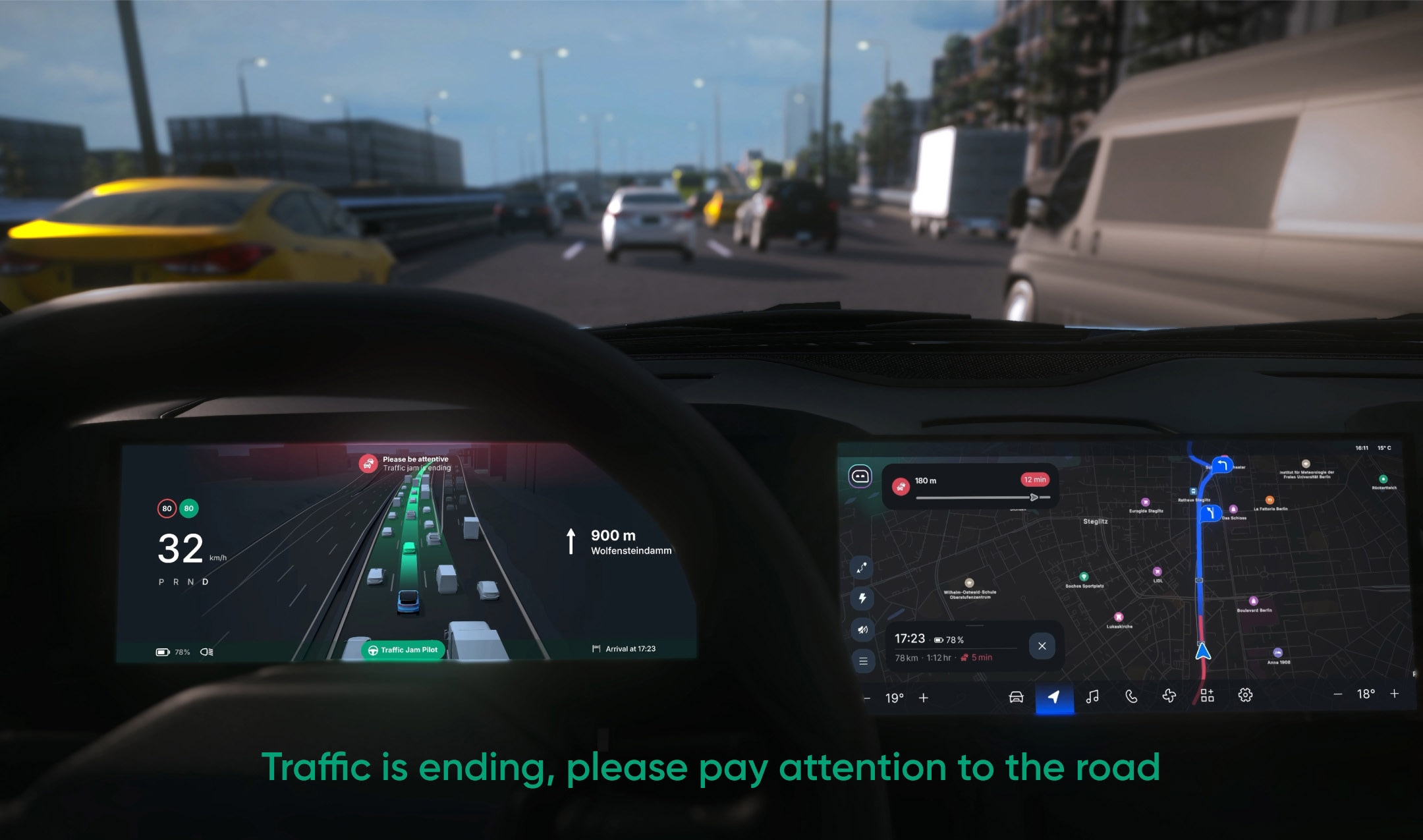
In a modern vehicle, software is where carmakers create moments of support, clarity, joy, excitement and anticipation, which can make the experience of driving a car more than a means to an end. Software is how a carmaker differentiates vehicles within its range and makes them stand out against those of a competitor.
Today, nearly every aspect of a vehicle and how it performs can be traced back to its code in some way. Software development then represents one of the most (if not the most) important aspects to get right when designing and building a vehicle.
But today, there’s even more to consider because new technology is beginning to take hold: AI. Now it’s time to say another “Hello” — this time to the AI-defined vehicle.
A consequential evolution
Even though it’s come around quickly, it’s a natural progression — AI is, after all, heavily reliant on its underpinning software, and cars have become data centers on wheels. They are primed for the next evolution.
It might seem like a fine line moving from smart features, such as navigation systems that sync with calendars to automatically plan routes, to true, fully fledged artificially intelligent systems. But there’s a lot more to it than improvements in front-end usability.
The evolution towards the software-defined vehicle gave carmakers the opportunity to start afresh with vehicle design, creating entirely new platforms and architectures, often with electric power trains.
Crucially, this move laid the groundwork for today's AI-defined vehicle. Centralized compute, decoupled hardware and continuous connectivity make it possible to introduce more advanced in-vehicle technology, and automated driving technologies and perception systems.
We’ve had voice assistants, now we have agentic AI-powered assistants that can handle complex, multi-faceted requests. We’ve had radar-guided cruise control, now we have end-to-end perception models that can sense when the car in front is driving even just a little bit erratically to inform appropriate action — such as giving the car more space to increase stopping distance.
In that sense, the AI-defined vehicle is not a break from the software-defined vehicle, but a continuation. Where software has defined a vehicles’ features, personality and how it updates over time, AI begins to redefine the vehicle’s capacity for performance.
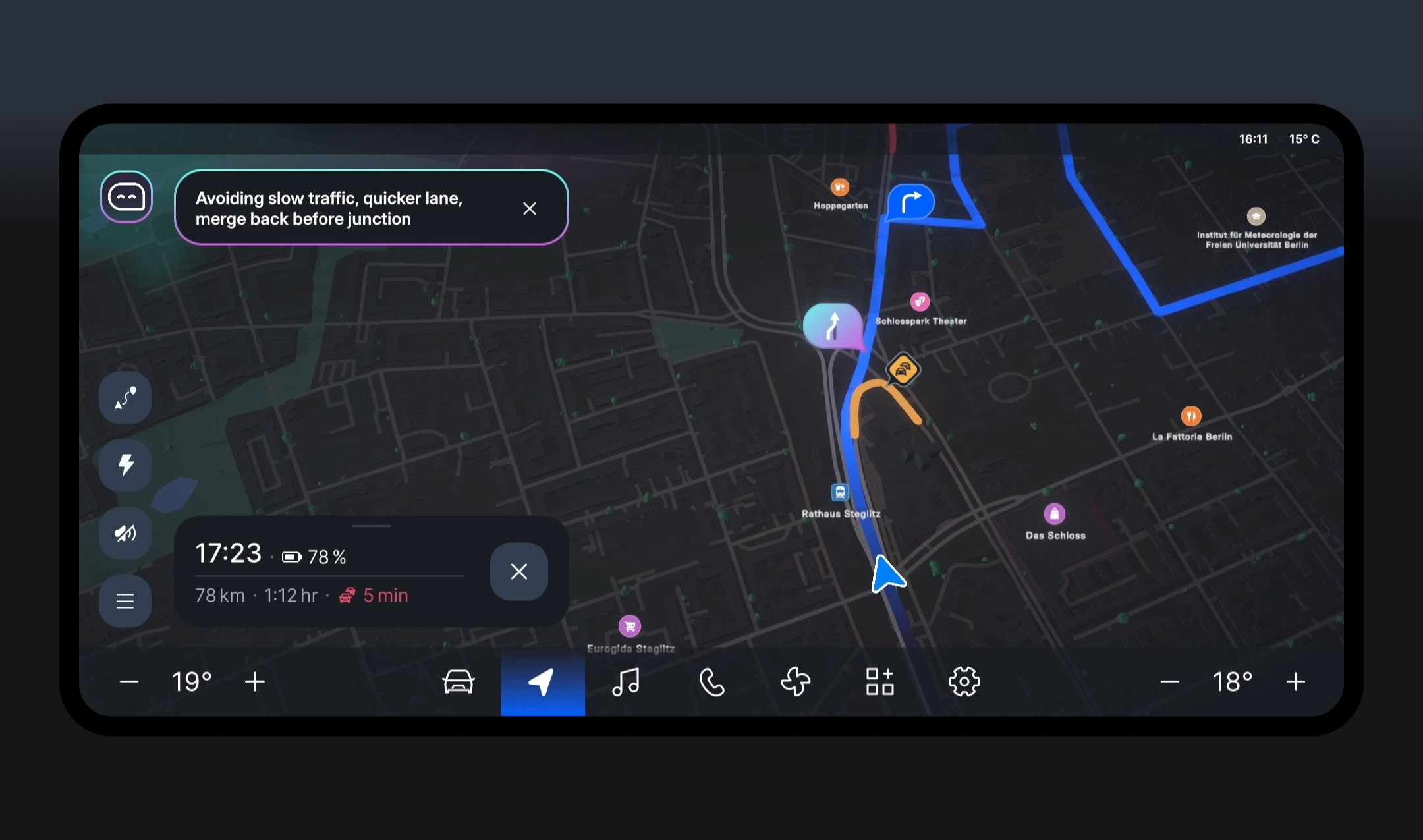 AI-defined vehicles will be able to do much more than just find a route. They will actively adapt to hold-ups and changes in traffic.
Ok, so what does “AI-defined” actually mean?
It must be a vehicle whose performance and behavior is shaped by continuously improving machine-learned models rather than hand-coded rules.
Advances in neural networks, self-supervised learning and end-to-end AI architectures are dramatically improved a vehicle’s ability to perceive its environment, predict what might happen next and respond dynamically. The AI-defined vehicle will display this in all aspects of it functioning, not just in its automated driving features but in its navigation, infotainment, battery management, HVAC control — everything.
The software-defined vehicle is one that you can set charging times and precondition using an app; it pairs with your phone to automatically play that podcast from where you left off and proactively suggests EV charging stations relevant to the journey you program.
The AI-defined vehicle is one that preconditions itself based on patterns of usage; it knows you prefer music to podcasts in the car, and it’s already programmed the route and charging stops based on real-time traffic. It’s one that will be able to take over driving, changing lanes, managing speed and deciding the best route to take.
It's also not constrained to improvements by periodic update. Through machine learning, whether on-board or cloud-based, it will continue to improve as it is exposed to, and learns from, more patterns, scenarios and more data.
This is the next significant step in improving the in-vehicle experience. But like with the software-defined vehicle, for carmakers young and old, the challenge of writing and maintaining that code remains. The closer that carmakers and developers can get to data providers and the data their models rely on, the better their AI systems can be.
People also read
)
Connecting to the world of AI agents: Introducing TomTom Model Context Protocol Server
)
25 years of GPS going public: How this tech policy changed maps and navigation forever
)
How does artificial intelligence improve mapmaking?
)
More than 20 years of mobile mapping, here’s how it began
* Required field. By submitting your contact details to TomTom, you agree that we can contact you about marketing offers, newsletters, or to invite you to webinars and events. We could further personalize the content that you receive via cookies. You can unsubscribe at any time by the link included in our emails. Review our privacy policy. You can also browse our newsletter archive here.