


)
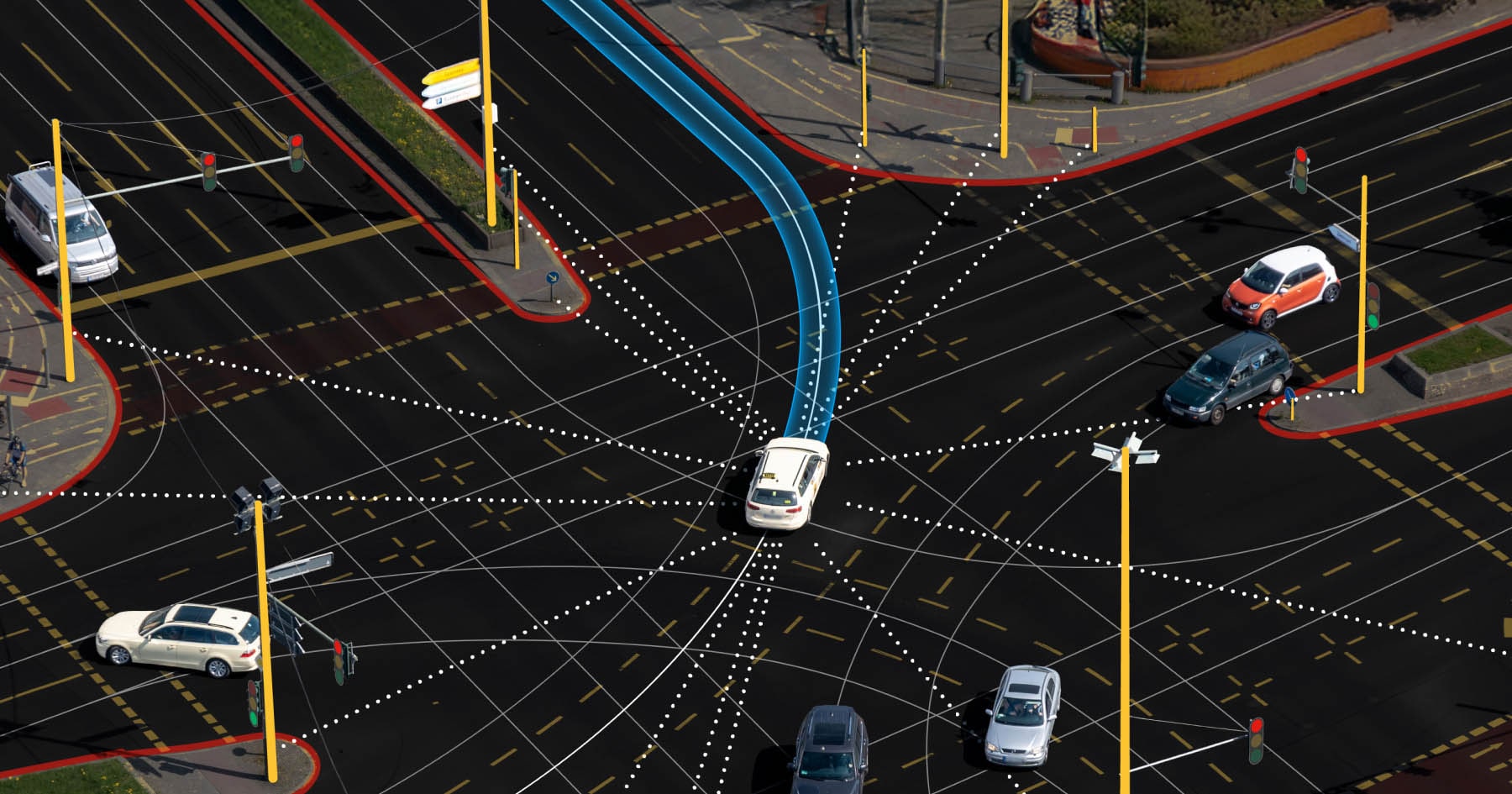
The software-defined era is reaching an inflection point. Today’s strategies will lay the foundation for tomorrow’s AI-defined vehicles — meaning that carmakers now face a critical decision: what do you build yourself, and what do you build on top of?
In a recent discussion at the Future of the Car summit in London, TomTom's Chief Product Officer, Leo Sei, highlighted that the software-defined architecture decisions being made today will set the foundation for the many generations that follow, dictating the pace and scale at which carmakers can innovate for the next decade.
It’s a big moment. And part of getting this strategy right is pinpointing which parts of a vehicle’s digital backbone are better handled in-house and where there’s more value in partnering with external specialists.
This sort of consideration has been central to automotive production throughout the industry’s history — with factors such as supply-chain resilience, manufacturing costs and technological specialization influencing whether or not to outsource certain components.
Traditionally, the more of the process a carmaker owned, the more control it had over how its brand came to life in the driving experience. But that was when hardware was the great differentiator. Today, vehicles are software platforms — and this shifts the paradigm entirely.
 TomTom CPO Leo Sei, the Future of the Car summit: "The software-defined vehicle is happening today."
Pinpointing value in the software-defined vehicle era
A car’s value was once tied to its features at point of sale. But with today’s SDVs laying the foundation for AI- and software-driven ecosystems, real value now resides in its potential for ongoing improvement implemented through updates. As Giovanni Giancaspro, Automotive Market Segment Manager, puts it, “The industry is moving towards software and AI architectures that learn, evolve and improve across multiple generations.”
Getting the SDV platform strategy right at this point is vital. Future-critical functions like full automation will depend on the choices carmakers make today about where to focus their time, expertise and capital.
It helps to divide the SDV platform into two distinct layers: foundational and differentiating.
The foundation layer is the underlying system that makes everything work: silicon and compute, operating systems and middleware, cloud infrastructure, connectivity and over-the-air (OTA) delivery, cybersecurity — plus the maps, location intelligence and core AI architecture that interprets the driving environment. It’s continuously updated, data-driven and designed to scale across vehicles and generations.
The differentiation layer sits on top. This is where carmakers shape how the vehicle behaves and feels: its driving characteristics, the user experience and its brand-specific digital features — touchpoints that customers come to associate with the brand.
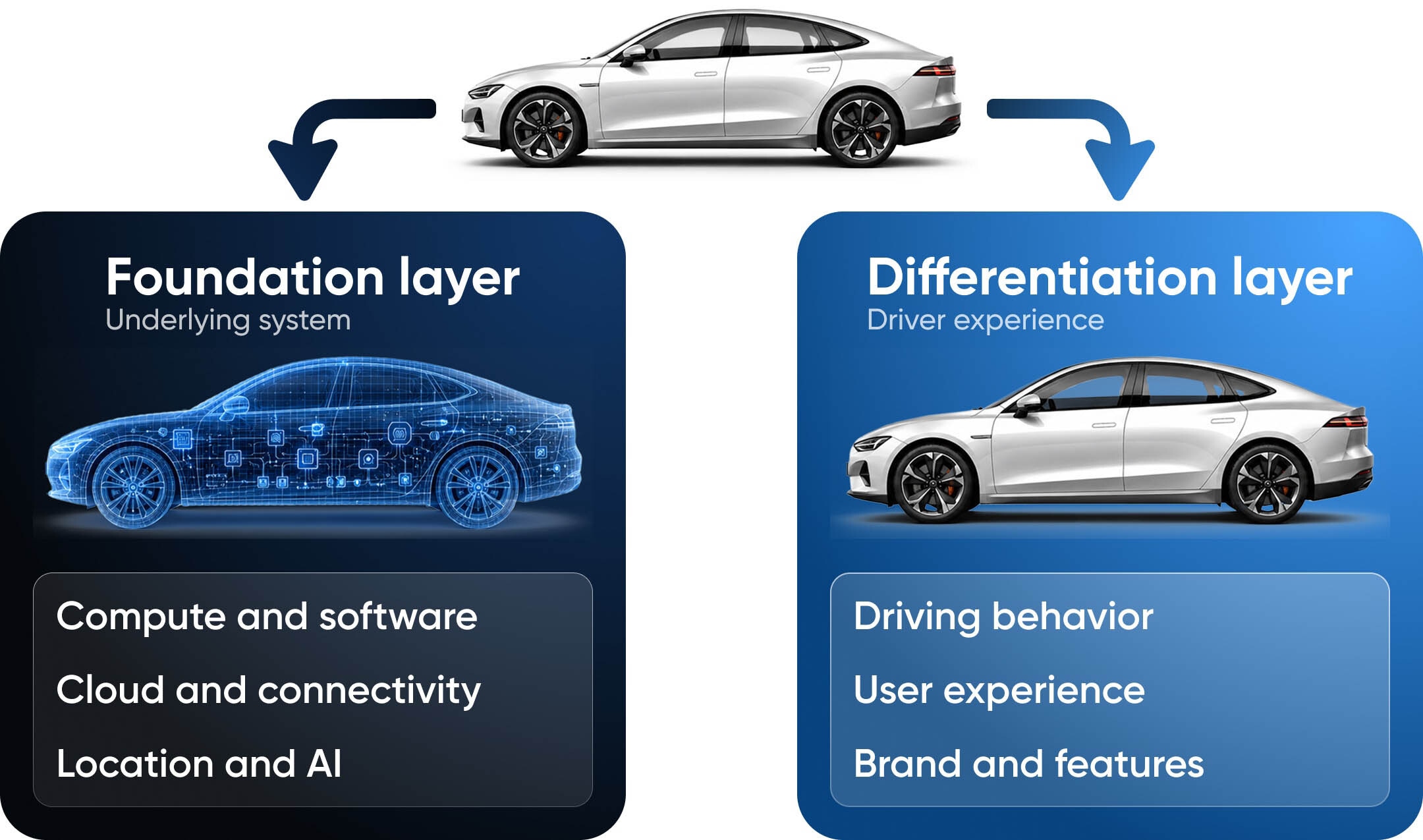 The foundational layer of an SDV is what makes it work; the differentiation layer is what makes its behavior and driving performance feel distinct.
Increasingly, the foundational layer is coming to be seen as infrastructure that’s shared across the industry — on the one hand because these components and databases are incredibly complex to build and manage, and on the other hand because it’s non-differentiating at a brand level.
In other words, trying to create this layer from scratch isn’t always the most impactful allocation of resources.
Increasing complexity, increasing specialization
Foundational infrastructure enables the driving experience — but it doesn’t define it. Investment here can absorb disproportionate effort and resources. In Giovanni’s words, “Some components are essential to enable the system but don’t create competitive advantage on their own.”
This is where specialist categories come in. A company whose sole focus is foundational technology — such as TomTom’s ADAS- and automation-enabling location intelligence — can innovate and scale faster than those spreading their capital and talent across multiple domains.
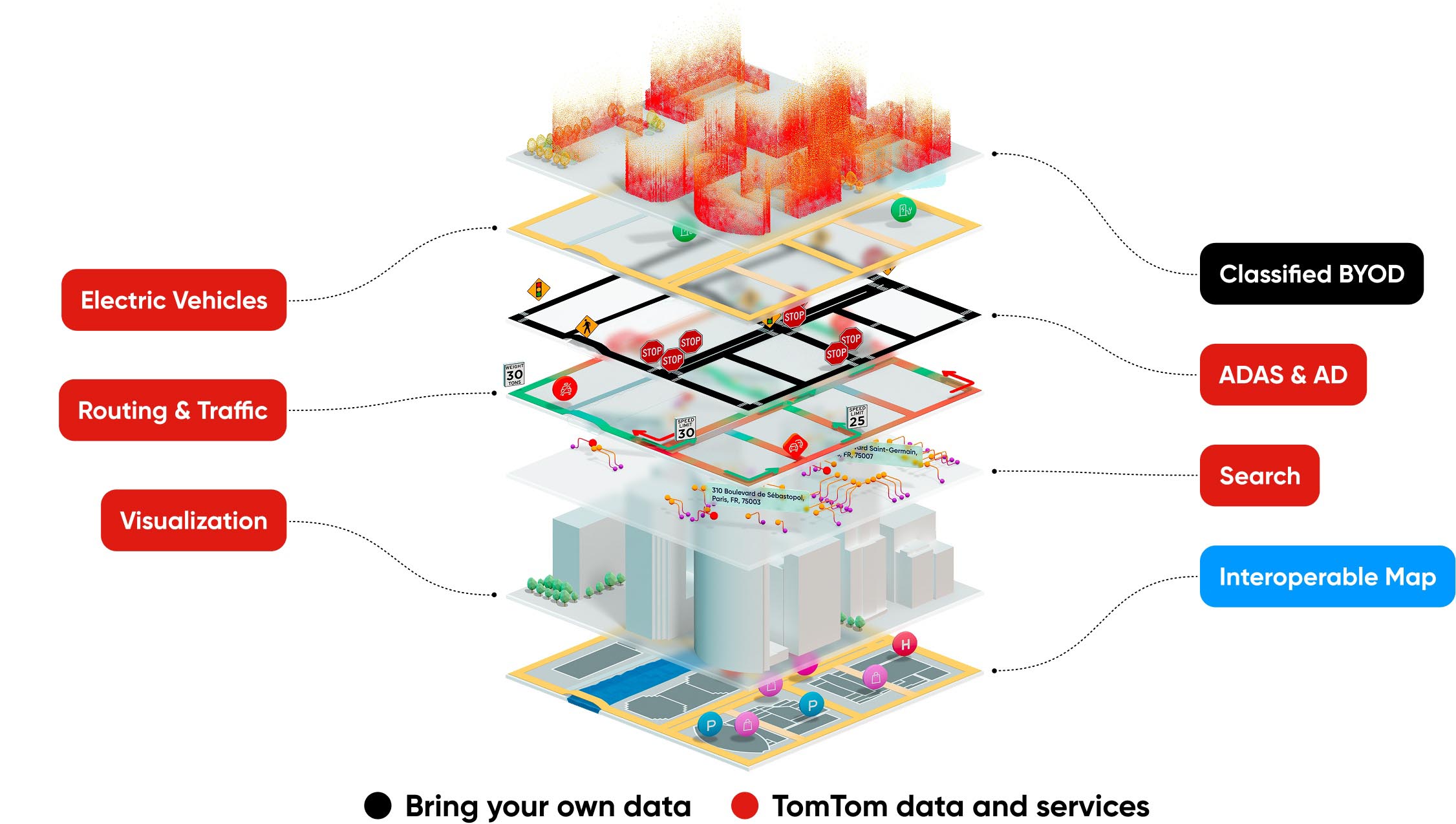 Location intelligence is a prime example of a specialized foundational technology. What was once just navigation — a dashboard feature — is now an environmental intelligence layer, a continuously updated representation of reality on top of which next-gen driving experiences will be built, from simple assistance all the way to full autonomy. In short: a world model for the AI era.
This pattern of specialization isn’t unique to automotive. As industries mature, foundational elements tend to become shared, scalable and expert-built — especially in the technology space, which carmakers are increasingly moving into. Just look at cloud computing: the foundational layer — data centers, compute, storage, networking — is built by specialists like Microsoft Azure, Google Cloud and AWS. Rather than trying to reinvent this capital-intensive, non-differentiating technology, software companies compete on how they use it.
The same logic applies to the automotive industry. Specialists present a solid opportunity — a means of implementing best-in-class foundational technology so that carmakers can focus their attention on where it really counts: designing unique, continuously improved, brand-fit driving experiences for their customers.
Leo encapsulated it succinctly at the Future of the Car summit: “Customization is where carmakers keep their brand DNA. You probably don’t want a Porsche and a Škoda to have the same automated driving experience — but that doesn’t mean you need to own the entire layer all the way down to the representation of the world.”
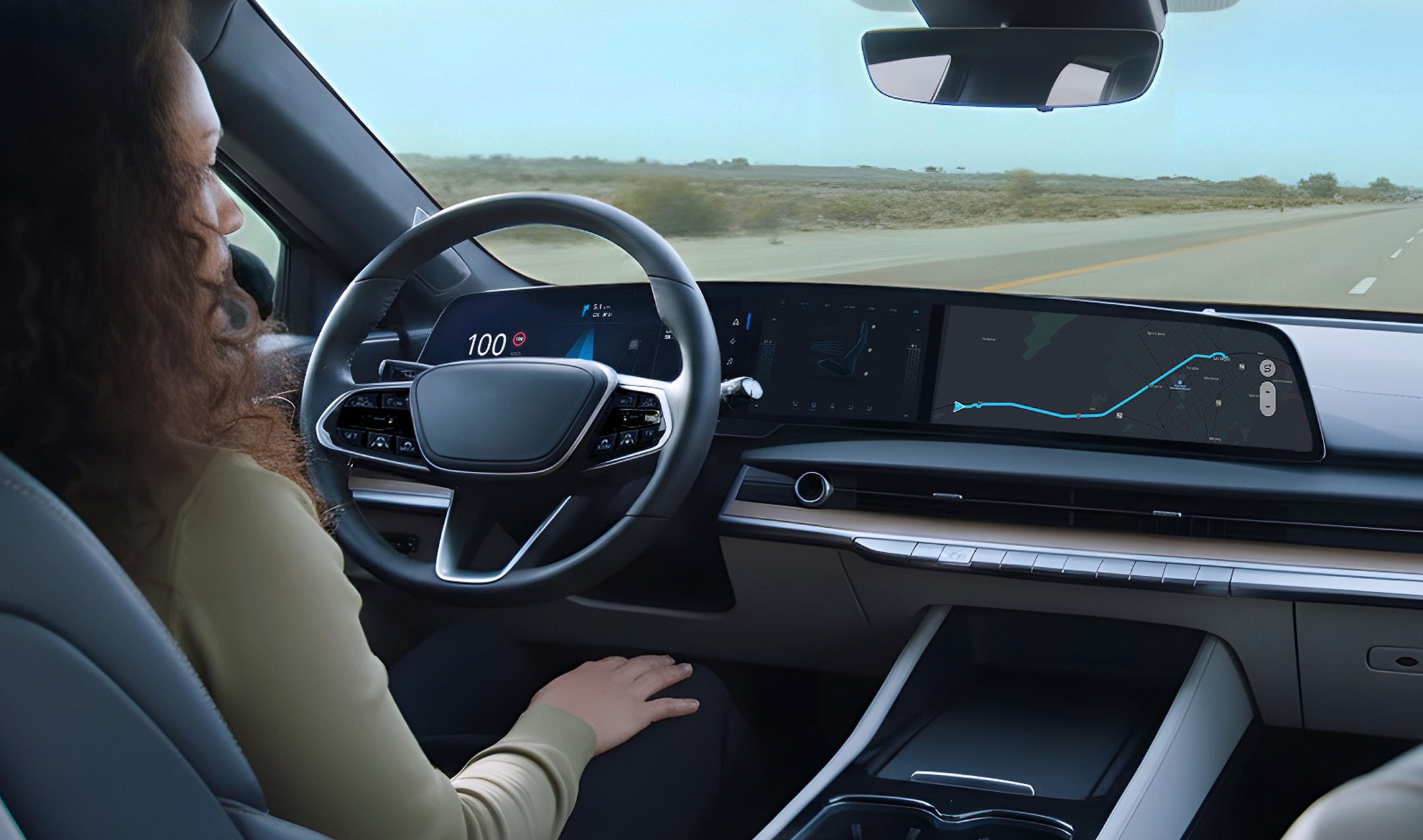 ADAS and automation rely on real-world context and environmental awareness to perform, but the location intelligence layer itself isn’t what defines the driving experience.
Investing where you compete, partnering where you don’t
Disruption is now a constant in the industry; but one principle remains unchanged: it’s the drive that sells the car.
This isn’t just the process of getting from A to B. It’s a culmination of details and driver touchpoints that ultimately define the brand, such as how a vehicle performs, how you interact with it, the ways in which you can access and control its features, its visual and display layout, the navigation experience, how intuitive the ADAS and automated functions feel, the ergonomics.
The list goes on — much further on. As Filip Klippel, Automotive Market Segment Manager, puts it, “The brand doesn’t only live in the car — it spans the entire customer relationship: how you buy a vehicle, how you maintain it, how it feels, how it smells. By freeing up resources to focus on what differentiates, carmakers can compete more effectively.”
[Read: From fixed machines to evolving platforms: The new challenge for carmakers.]
Finding the perfect fit
Ultimately, the best strategy arises from two considerations: where does process ownership create meaningful differentiation, and where do partnerships provide the greatest opportunities for speed, scale and innovation.
But this is just a blueprint for future-proof SDV platforms — not a magic bullet. “There’s no one-size-fits-all answer,” says Filip. “It depends on a carmaker’s strategy on how they prioritize their resources. They decide their own balance between foundation and differentiation.”
That’s why there’s merit in flexible partnerships. Modular solutions mean that carmakers can take advantage of specialist technology more selectively, choosing the bits and pieces that best fit their strategy.
That flexibility matters most where the stakes of differentiation are highest. Take automated driving, for instance. The system itself won't be what sets one carmaker apart from another — the real differentiator is how the vehicle feels to ride in, and how clearly the onboard experience keeps the driver informed, at ease and ready to react when it matters.
Location intelligence sits underneath both. It gives the automated driving system the context to anticipate what's around the next corner, and translates that same context to everyone inside the vehicle.
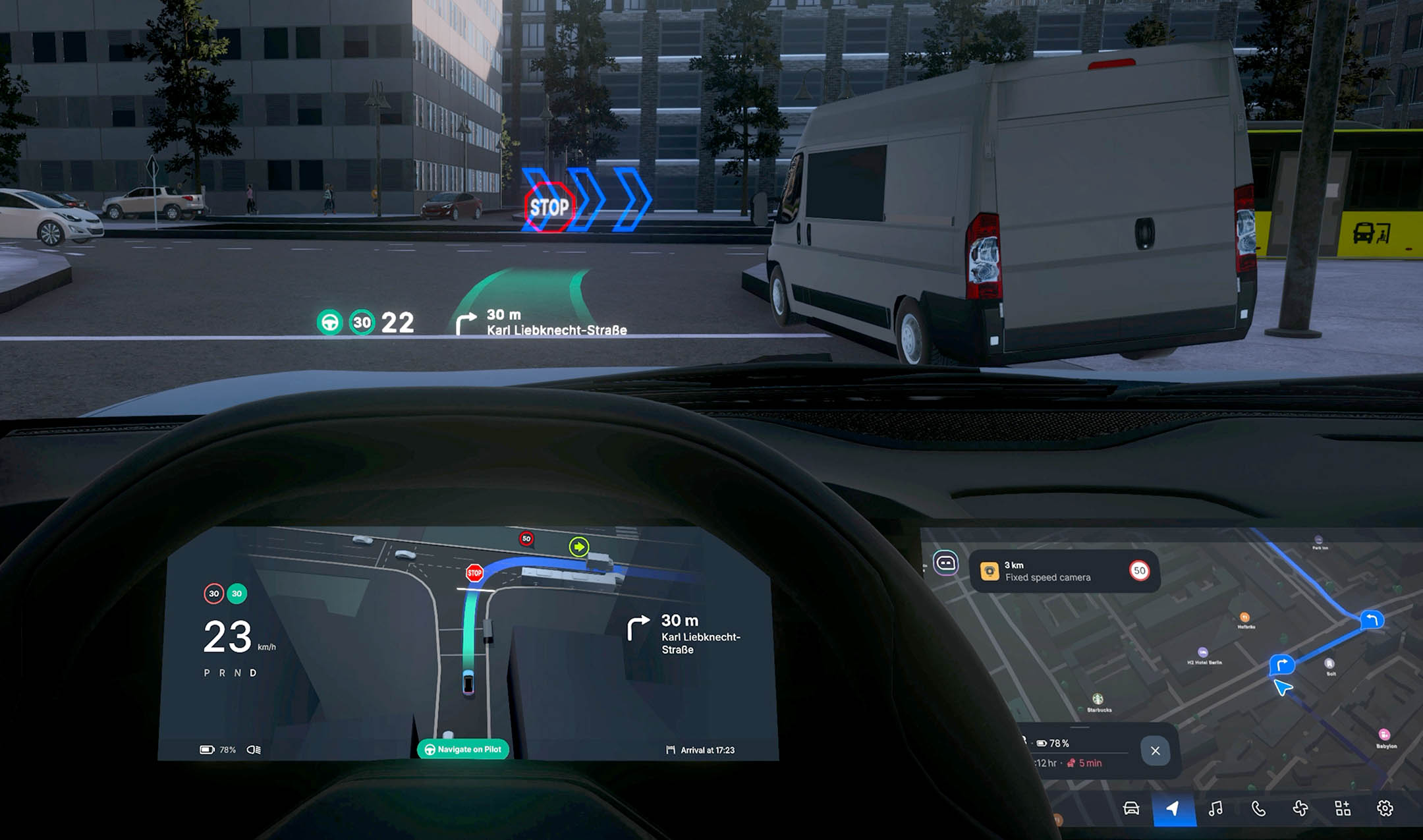
This is where TomTom's decades of location expertise come in. Its foundational layer, Orbis, provides a live model of the world that's continuously refreshed through automated multi-source fusion, with the lane-level accuracy required for navigation, ADAS and automated driving. It's essential, neutral infrastructure — the common ground beneath distinct SDV experiences.
Partnerships like this give carmakers greater agency over what they build. It allows them to leverage strong foundations — unlocking speed and scale — while freeing up resources so that they can elevate and amplify their identity in the AI-defined era.
People also read
)
)
)
)
* Required field. By submitting your contact details to TomTom, you agree that we can contact you about marketing offers, newsletters, or to invite you to webinars and events. We could further personalize the content that you receive via cookies. You can unsubscribe at any time by the link included in our emails. Review our privacy policy. You can also browse our newsletter archive here.