


)
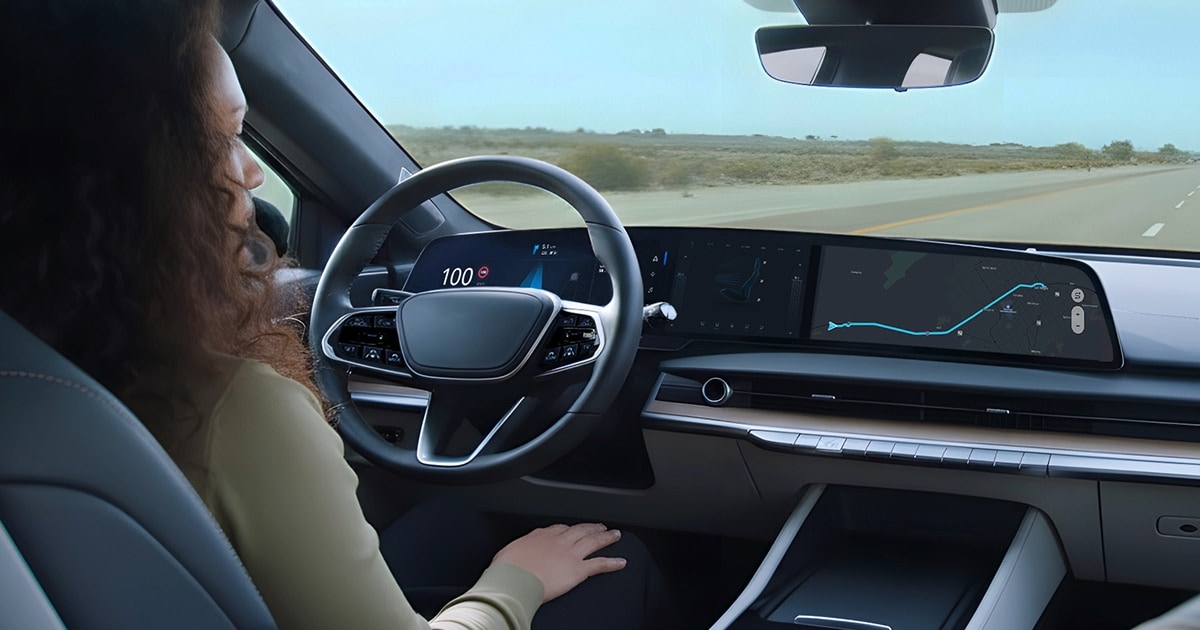
The TomTom AI Agent is here. And while essential for bringing intelligent navigation into the vehicle, there’s far more to this solution than meets the eye. Built on a growing number of industry partnerships — most recently SoundHound AI, Amazon and Visteon — it’s the bridge between existing software stacks and new experiences, simplifying integration efforts so that carmakers can create seamless voice experiences quickly and cost effectively.
To capture the full scope of what's possible with the TomTom AI Agent — how it coordinates with market-leading AI voice assistant providers, its navigation intelligence capabilities and more — we spoke with Roger Chan, Senior Product Manager and an expert in automotive AI.
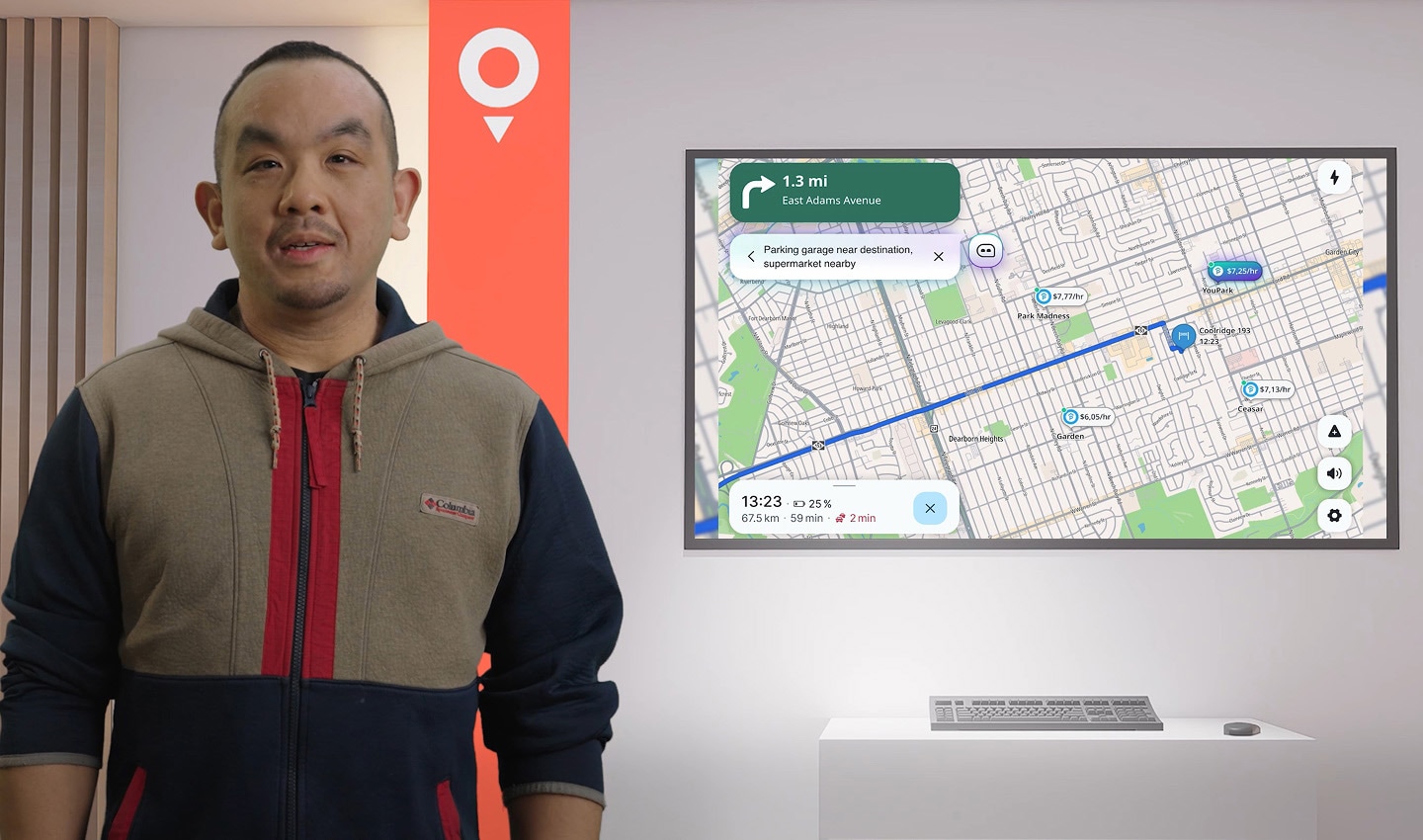 Roger Chan, TomTom's Senior Product Manager.
TomTom Editorial (TTE): AI has transformed what’s possible with voice assistance. How is this affecting the automotive industry?
Roger Chan: We’ve seen a fundamental shift from a basic, command-based system to a sophisticated, conversational AI. This is changing what drivers expect from a vehicle. It doesn’t just take you from point A to point B; it’s another digital touchpoint that keeps you connected to your work schedule, your social calendar, your smart home systems.
And it takes natural, context-aware interactions to bridge these spaces — an in-vehicle assistant that can navigate to a meeting found on a calendar or message a friend with a restaurant recommendation and an ETA. To put it another way: driving is becoming a digital experience, and good digital experiences are seamless. If carmakers don’t evolve with this expectation, they risk losing a direct software relationship with the driver to screen-projection systems like CarPlay or Android Auto.TTE: So what’s stopping carmakers from bringing seamless voice experiences into the vehicle?
RC: It’s the complex and resource-heavy task of merging legacy software stacks with new AI capabilities. This sort of integration often risks delays, technical instability and brand inconsistencies, especially when multiple suppliers are involved.
Normally, a total system design would be easier, albeit expensive and time consuming. But with TomTom, merging these legacy stacks with intelligent tech is simple, fast and cost effective.
TTE: How does TomTom help solve this issue?
RC: With a modular, multi-agent architecture that integrates seamlessly into a carmaker's tech stack — including its existing AI voice assistant.
Multi-agent architecture is a system where several AI agents can work together to break down and solve complex tasks. Our automotive AI solution, the TomTom AI Agent, is designed to work within this system, simplifying supplier sprawl by providing a unified navigation expert that coordinates across different vehicle domains using industry-standard protocols.And because the TomTom AI Agent is cloud based, carmakers can innovate and improve the driving experience rapidly via continuous updates.TTE: You mentioned compatibility with existing voice agents. How does this work, exactly?
RC: Through a process called 'multi-agent domain orchestration'. The car’s existing voice assistant deals with general requests around music, weather or advanced driver-assistance systems (ADAS). But when it detects a navigation-specific request, it hands it over to the TomTom AI Agent. Our agent then analyzes the driver’s specific intent and finds the best way to fulfill it using TomTom’s extensive routing, traffic and location services, generating both a natural voice response and a structured command to the car’s navigation system, which responds immediately.
This even works in advanced, cross-domain use cases. For example, looking up a meeting location and navigating there while simultaneously sending a text about the destination’s weather.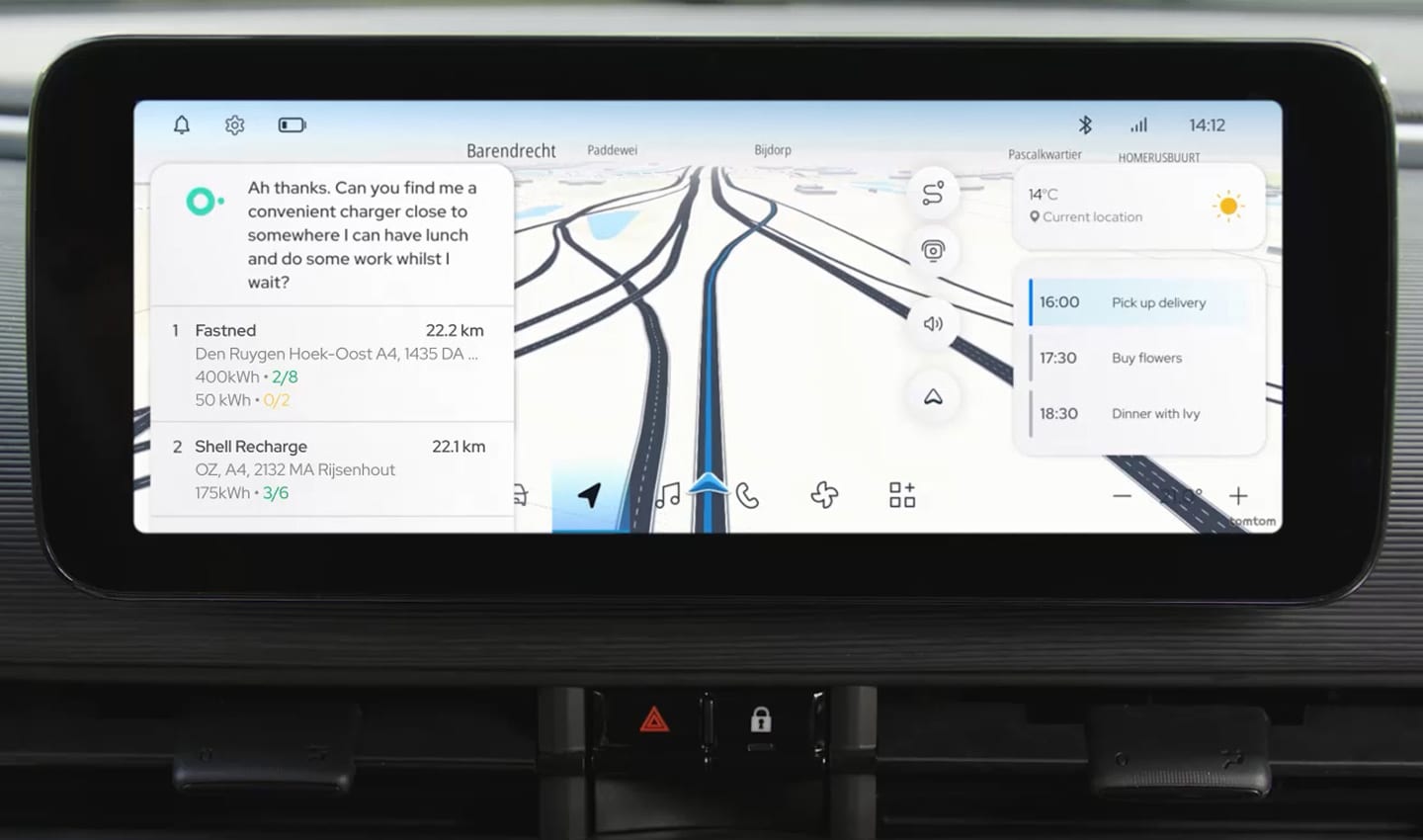
TTE: How do maps and navigation intelligence inform the agent’s logic?
RC: I'll provide some context first. Our automotive portfolio is built on the TomTom Navigation SDK, which combines the freshness and granular detail of our new mapping platform, Orbis Maps, with live traffic services. Available both as an application (known as the Automotive Navigation Application) or an SDK, it lets carmakers choose the best fit for their strategy, whether that’s a pre-packaged solution for faster integration or a more customized approach.
The TomTom AI Agent is pre-integrated with the Automotive Navigation Application, which means voice responses are perfectly synced with what’s displayed on the navigation UI. But it can also be adapted for carmakers who use their own custom navigation UIs via our SDK. Essentially, it’s designed to adapt to meet an OEM’s specific requirements.By drawing on Orbis Maps, our agent can process complex, multi-criteria requests — such as finding a fast charger near a Chinese restaurant — while ensuring all suggestions are relevant to the driver's current route. And because the TomTom AI Agent monitors vehicle data, including fuel or battery level, current location and driver history, it can proactively suggest options, such as rerouting around worsening traffic or recommending charging stops that match a vehicle’s specific battery requirements.TTE: Integration paths will vary between carmaker and voice assistant providers. How does TomTom keep the driving experience consistent?
RC: As mentioned, the TomTom AI Agent is cloud-based. This approach guarantees that the same logic for routing, search, EV services and traffic is delivered uniformly across different carmaker specifications and hardware setups.
Additionally, the system transmits specific UI commands to the TomTom Automotive Navigation Application. This coordination keeps on-screen information and voice responses synchronized, ensuring the same action across all platforms.TTE: Does TomTom partner with any voice assistant providers — or any other pertinent organizations, such as system integrators?
RC: Yes, collaboration is critical. Creating a high-performance voice experience requires a combination of specialized audio hardware, speech-to-text software designed for noisy in-car environments, geospatial expertise and much more.
TomTom is working with SoundHound AI, a platform that specializes in AI voice and optimizing it for vehicles. We’re also actively partnering with market-leading AI voice assistant providers — most recently Amazon, bringing its assistant, Alexa, into the vehicle. This sort of collaboration is important; by ensuring compatibility, we can support most carmakers without requiring them to change their preferred voice assistant.
And we’ve just announced a partnership with Visteon, whose automotive software and AI integration expertise are essential for seamless driver experiences.
 TomTom has partnered with Amazon, bringing AI voice assistant Alexa into the car, while Visteon and SoundHound AI improve conversational navigation intelligence.
TTE: What about privacy? How does TomTom manage data derived from voice interactions responsibly?
RC: A focus on secure, navigation-specific data usage. The TomTom AI Agent operates in a hybrid fashion, using the cloud for complex reasoning while making sure that only conversation history related to navigation is stored.
And, most importantly, carmakers retain full ownership of driver data and system branding, ensuring that user consent and data security remain under their direct control.TTE: And what’s next? How do you see the role of in-vehicle voice evolving?
RC: We’re entering an era where the vehicle is a natural extension of a person’s digital life. We expect to see further integration between car software and the home and office, allowing drivers to manage work schedules, productivity tools and smart home systems through voice as seamlessly as they do on a smartphone.
For TomTom, the future of the AI Agent is all about closing the 'experience gap' by combining specialized navigation expertise with next-level interoperability. The TomTom AI Agent will evolve beyond real-time route adjustments to support complex tasks like multi-day, conversational trip planning, hands-free road hazard reporting — and even voice-based transactions for parking and EV charging. Our roadmap includes adding a comprehensive 'ask me anything' capability and deeper integration with ADAS. This will let the agent 'see' the surrounding environment for hyper-contextual guidance. Furthermore, the TomTom AI Agent team is exploring the potential of onboard small language models (SLMs). Currently, our agent uses the cloud to handle complex reasoning — but there's an opportunity to introduce low-latency, offline-capable performance for core vehicle functions by integrating SLMs into vehicle hardware. This would mean the best of both worlds: deep intelligence and continuous updates via the cloud paired with the speed and reliability of onboard AI for essential navigation and control in areas with poor connectivity.TTE: Exciting times ahead. Now, back to the present: CES 2026 is underway; what should carmakers look for in TomTom’s demos to better understand these solutions?
RC: We’ll not only show how seamlessly the TomTom AI Agent and the Automotive Navigation Application integrate into vehicles, but just how flexible this solution is for meeting specific OEM requirements. Attendees will experience a range of critical navigation use cases, each of which demonstrates the TomTom AI Agent operating within a multi-agent architecture alongside leading AI voice assistants to deliver a safer, smarter, more cohesive driver experience.
There are three key areas I’d suggest paying close attention to:Intelligent trip planning and complex search: How the TomTom AI Agent handles multi-criteria requests with a single, fluid conversation.
Proactive route intelligence: The clear, contextual reasoning behind our agent’s suggestions based on live traffic and hazards.
Seamless cross-domain actions: How fluently the system coordinates requests that encompass multiple domains, such as navigation, calendar events and weather.
[To learn about year's product demos, read: TomTom’s CES 2026 product demos: What you can expect to see in Las Vegas.]
TTE: And finally, if a carmaker wanted to explore this further, what’s the best way forward?
RC: The most direct way is to contact our sales team and schedule a technical discovery session. We will work with you to understand your specific vision for in-car AI, identify current pain points and prioritize navigation use cases most important to your customers.
We can then provide a demonstration application that lets you test the performance, conversational experience and accuracy of the TomTom AI Agent firsthand. From there, we’ll collaborate with your preferred AI voice assistant partner to move into a pilot phase.Ready to bring seamless voice experiences into the car? TomTom's product specialists are here to help you get started.
People also read
)
Why are carmakers racing to build smarter in-car AI?
)
TomTom’s CES 2026 product demos: What you can expect to see in Las Vegas
)
Customize, integrate, deploy in weeks: TomTom’s new in-vehicle navigation application
)
TomTom’s AI strategy is already improving customer experiences — here’s how
* Required field. By submitting your contact details to TomTom, you agree that we can contact you about marketing offers, newsletters, or to invite you to webinars and events. We could further personalize the content that you receive via cookies. You can unsubscribe at any time by the link included in our emails. Review our privacy policy. You can also browse our newsletter archive here.