


)
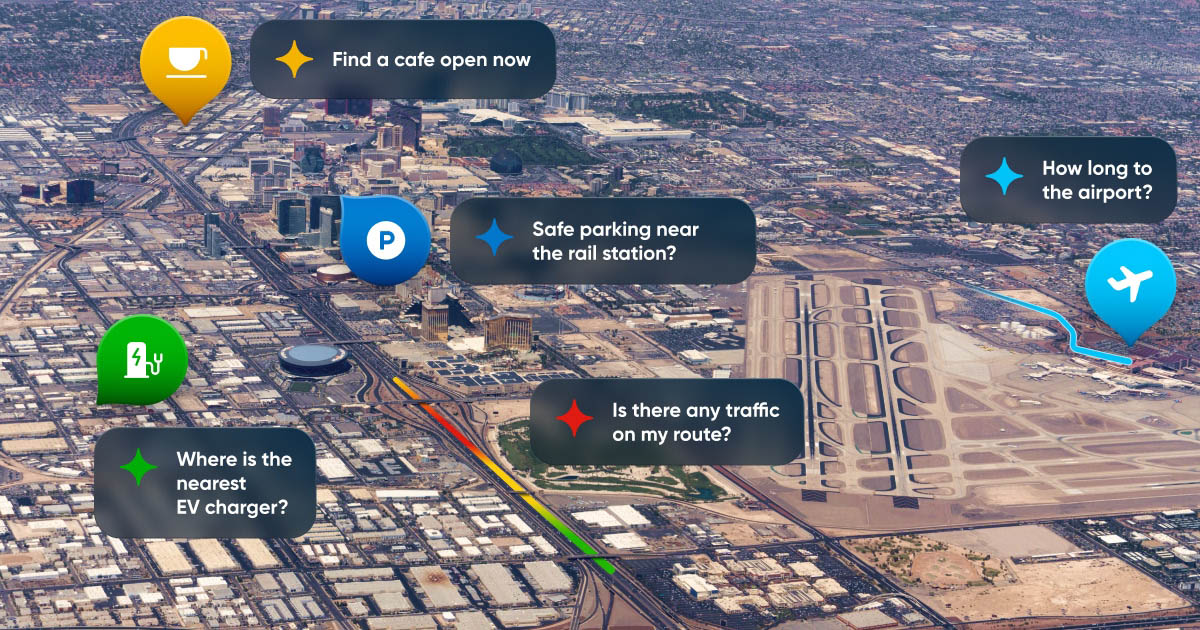
AI is no longer only about assistants, it’s starting to reason, decide, and in some cases, take action. Though it can process enormous amounts of data and create multi-step workflows, its decisions are only as correct as its understanding of the real world. It needs constant, accurate and reliable access to reality, as it happens. This connection to the real world makes or breaks the efficacy of AI for businesses. Context is crucial and TomTom’s location intelligence provides it.
TomTom has never really been in the business of making maps. Or satnavs, or automotive navigation for that matter. At its core, the company has always been about making the world understandable and data usable — giving structure to unstructured data. Maps are one expression of that. Location intelligence is the newest. For more than 30 years, we’ve translated the physical world into something useful — first maps for satnavs, then automotive systems and apps and now AI. The technology may be new, but the expertise isn’t.The world is building with models
AI can already write, plan and decide. Across industries, automotive, insurance, public sector and the new wave of AI-native companies are putting these abilities to work. There are more and more instances where humans are in the loop, but the majority of tasks are done by AI systems.In automotive, AI is moving from warning drivers to interpreting the road and acting on it. In insurance, it helps assess risk, understand behavior and make decisions across pricing and claims. Public-sector organizations are using AI to identify risks, manage infrastructure and decide where intervention is needed most. And a new generation of AI-native companies is building agents that can query data, plan tasks and act on behalf of people.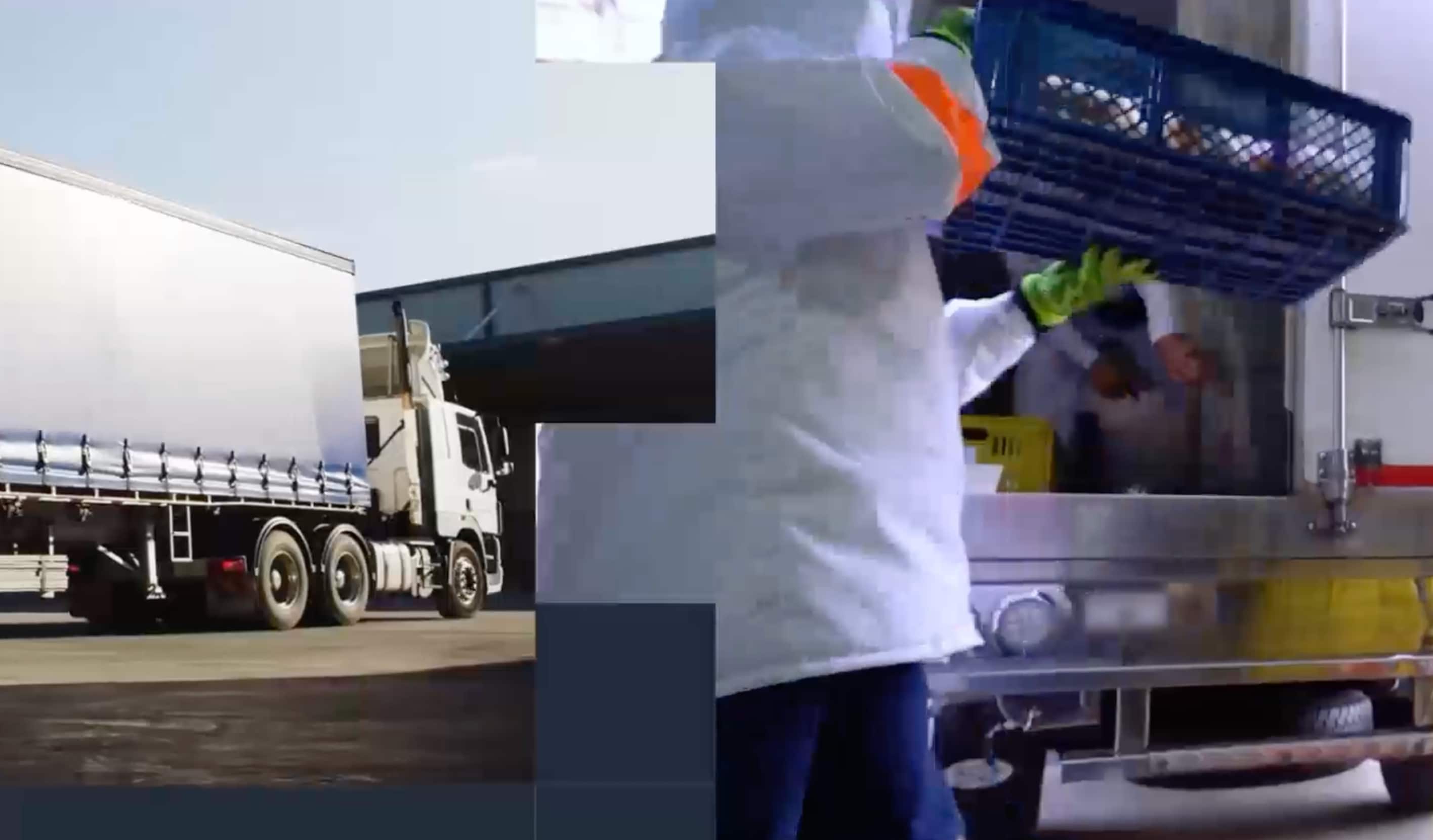 Grounding-usecases
The applications are different, but underneath, each one faces the same challenge: when AI moves from generating an answer to making a decision or taking action, it needs to understand the world that decision will affect. Because these decisions can be safety-critical, where they directly affect human lives and physical safety, or decision-critical, where digital decisions have real consequences for business cost, risk and outcomes. In both cases, getting the context right is no longer optional.
“Mike Schoofs
CEO, TomTom
Real risks and costly consequences
The cost of incorrect decisions is perhaps the biggest risk of using AI in safety critical workflows. In automotive, it is about people’s safety and trust in systems. Regulators are closely looking into performance of automated driving systems. Recently U.S. regulators upgraded their investigation into Tesla’s self-driving software after crashes in low-visibility conditions, examining whether it could respond appropriately to glare, fog and airborne dust.
In another case, also in the U.S., a judge upheld a $243 million verdict against Tesla over a fatal crash involving Autopilot. The details of these cases differ, but they point to the same dilemma. When AI acts in the physical world, gaps between its understanding and reality can have severe consequences. For AI to act safely, it needs the context to understand what is actually there.
The same principle applies when the consequences are decision critical. Insurance is one such example. When AI tools automate and measure risk or validate claims, it directly connects with costs and payouts, opening a legal minefield for Insurtech organizations. A new category of insurance is emerging specifically for AI hallucination liability to cover for losses arising from AI errors, recognizing that when AI is embedded in critical business processes, a wrong answer can become a financial liability. The quality of an AI decision depends not just on the model or AI system, but on the version of reality it’s reasoning from. Whether the outcome is a vehicle making the wrong move or an insurer making the wrong call, AI needs a reliable view of reality before it can make reliable decisions.
Balancing innovation with compliance
While the compliance and safety standards for regulated industries have always been high, with AI in the mix, there’s more at stake. But that’s not the only challenge. It’s a balancing act of managing business innovations and delivering the best possible experiences while being commercially viable.This is true for all industries; automakers are trying to innovate with AI workflows within the cockpit but struggling to keep the integration costs down. Insurers, On-demand and Fleet and Logistics organizations need to maintain a competitive advantage by giving the best experiences to their customers, without losing their intellectual property and data. And in the world of AI native organizations, bringing innovations at speed is crucial to keep them in business.They need to move quickly and grow sustainably, without compromising on safety or compliance as AI becomes embedded in all manner of systems and tools.
TomTom Location Intelligence: Where AI connects to reality
Processing location data and turning it into insight is nothing new for TomTom. What’s changing with AI is how that intelligence is accessed and used. TomTom is continuing to reinforce a new layer on top of our data foundation that makes location intelligence accessible to the AI tools of today and tomorrow. It makes TomTom data legible to AI systems translating the complex data such as maps, traffic and real-world location data into shapes, graphs, IDs, ontologies and guided frameworks AI can understand, reason with and act on.
In short, TomTom is redesigning how the physical world is made intelligible to AI.TomTom is uniquely placed to offer this intelligence context for, what is being defined as, the age of AI. We continue to help customers turn their ambitions into real-world impact with the data, intelligence, expertise and architecture to build AI systems that are grounded, scalable and ready for the demands of the physical world. There are several reasons why.1. Ground truth: A trusted data foundation
Accurate, validated and fresh database, gathered via broad range of sources and built with location expertise spanning decades. Working on open and interoperable industry standards through Orbis and TomTom’s Overture partners ensure that the ground truth we provide to AI is as accurate and real-time as it can be. It makes our data foundation unlike any other in the world.
- 30+ years mapping the world
- 235+ countries and territories mapped and growing
Billions of data points ingested, validated and continuously updated
15+ years of on-road proprietary historic data.
Live traffic information updated every 30 seconds.
2. Mobility intelligence: Real-time, dynamic data
A big part of TomTom data is the dynamic mobility data. Adding the time factor to location is crucial for analytics, prediction and real-time context. For a driver or an ADAS system, knowing the speed limits or when a road is blocked in real-time can change the safest route. For an insurer, understanding when and where risk occurs can sharpen pricing and claims decisions. For a city, seeing how traffic moves through its streets can inform planning. For AI, it turns static location into context that reflects the world as it is.
Global data for road-level and lane-level semantics and maps
Growing network of roads with all roads mapped, not just highways
Unified speed services and hazards data
Live traffic information updated every 30 secs
3. Maintaining data integrity: AI you can audit
Hallucinations and mistakes are part of how AI learns and evolves, but now, businesses need to comply with regulations and the decisions need to be traceable. Working with AI and its black-box nature; this is only possible if strong data ethics are in place.
TomTom treats data integrity as a prerequisite for trustworthy AI — from where data comes from to how it is used and validated to setting up guardrails against scraping. Its data sources have verified provenance, with licensing, IP and privacy rights built into the way data is collected and managed. Data is then anonymized, curated and validated through transparent processes, so customers and AI systems can rely on it to be accurate, consistent and fair. TomTom also builds its data practices around responsible use and compliance, including GDPR and emerging AI regulations.
Verified provenance with trusted, traceable data sources with stringent licensing and IP rights
Explainable decision trails with control over data access and use for strong data provenance
Transparent validation where data is checked for accuracy, consistency and fairness
Privacy by design aligned to evolving AI regulations and GDPR by anonymizing data that cannot be traced to an individual
4. Industry partnerships: Embedded in ecosystems
TomTom brings decades of expertise in mapping and traffic, combined with deep knowledge of how location intelligence is used across automotive, public sector and other industries. Our close association with leading technology, automotive and geospatial organizations gives us a broad view of the challenges customers are solving, from expanding into different geographies, tackling regulation and the complexity of integration; our industry insight helps us build location intelligence that fits into the systems they already use. A recent example of this is the collaboration with Microsoft, making TomTom location intelligence accessible to developers and builders through Fabric.
Through partnerships and collaborations with organizations across automotive, public sector, Insurtech and varied customers using location analytics, we contribute to and learn from a wider ecosystem shaping the future of location intelligence.
77+ car brands use TomTom tech
Global partners such as Cariad, Microsoft as well as through Overture co-founders Meta and AWS
Embedded in ecosystems across big tech platforms such as Microsoft, ESRI and many more
Customers across government and public sector across 5 continents
AI-ready products: Now and upcoming
TomTom is well on its way in building a new product architecture that makes its location intelligence both accessible to AI and legible to AI systems. It brings together an evolving portfolio of AI-ready products and a new location intelligence layer, helping customers build, deploy and scale AI faster while keeping control of the data and intelligence behind it.

The architecture is designed to enable innovation across every surface — from accessing TomTom data through APIs and building with SDKs, to connecting AI workflows through MCP connectors and using increasingly capable agents. At the center is Encode, the layer that translates TomTom’s rich location data into a language that AI systems and agents can understand, reason over and use through embeddings, ontologies and semantic relationships. Soon available through private preview, Encode creates a bridge between the questions AI asks and the accurate, contextual answers TomTom’s data provides.
Location that reasons
A robust data foundation is a must, but data alone does not make AI smarter. It still needs to find the right context for the questions asked. TomTom's location intelligence layer does that work. It compresses road, lane, place and traffic knowledge into representations that AI systems can search by meaning, not just coordinates. This is a shift from getting static answers in form of a database or a tile to answers built on top of reasoning by the AI systems. This 'inferential reasoning' includes spotting anomalies, clustering patters and pulling out the context a decision actually depends on. For example, a claims system may ask, "Is this intersection unusual for this time of the day?" and the reply is an evidence-based answer, not just a data file.
For TomTom, this isn't a pivot. It's the same map data, the same validation, the same 30+ years of ground truth — but now, it’s packaged for a new kind of user.People also read
)
)
)
)
* Required field. By submitting your contact details to TomTom, you agree that we can contact you about marketing offers, newsletters, or to invite you to webinars and events. We could further personalize the content that you receive via cookies. You can unsubscribe at any time by the link included in our emails. Review our privacy policy. You can also browse our newsletter archive here.