


)
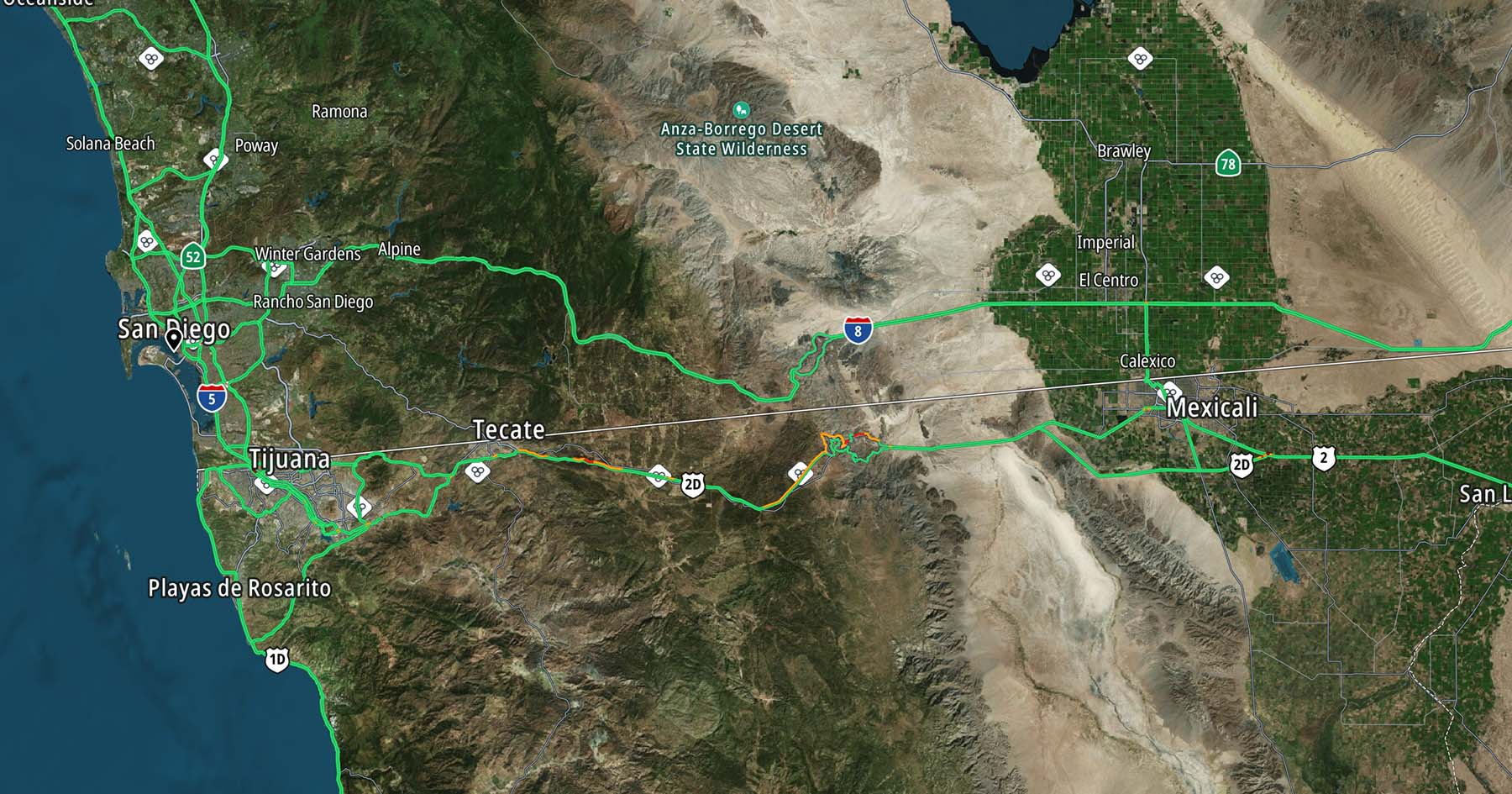
As the Football World Championship 2026 nears its end, its impact extends far beyond the stadium. New TomTom traffic data reveals rising congestion at several key U.S.–Mexico land border crossings, highlighting how a global sporting event can reshape mobility patterns across an entire region. Using proprietary traffic data from six major gateways — Calexico, Otay Mesa, San Ysidro, Santa Teresa, El Paso and Laredo — we compared conditions during the opening weeks of the tournament with the same period in 2025 to identify how cross-border travel behavior changed as fans, teams and tournament-related activity.
Across all six crossings, border congestion rose by 15.6% YoY in June 2026, with a sharper 16.9% increase from June 11–30, the opening stretch of the tournament. Otay Mesa stands out as the clearest hotspot, averaging 37.3% YoY growth during the tournament window and spiking as high as 66% on Sundays compared with the 2025 baseline. Calexico, about 110 miles east of Tijuana and without a nearby host city, still jumped 28.6% YoY in the same window, suggesting that tournament-related travel is influencing mobility far beyond host-city boundaries.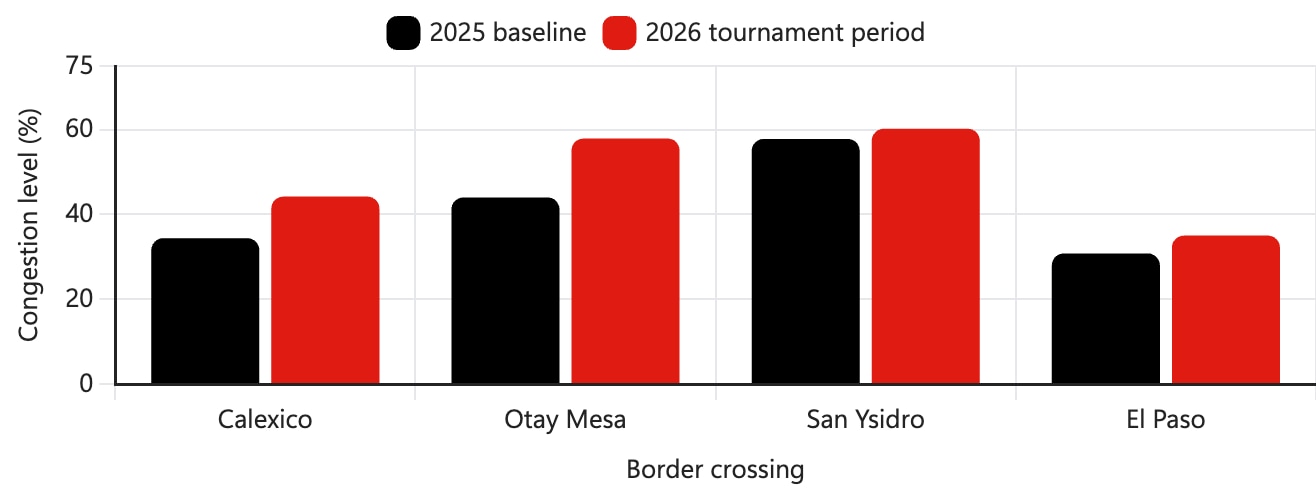
Cross-border traffic through Otay Mesa and San Ysidro increased significantly during the tournament period. The week of June 15 marked the peak (+25.9% YoY), coinciding with the first full week of matches and Iran's group-stage opener at SoFi Stadium, suggesting a potential link between tournament-related activity and increased border movements. The Irananian base camp was in Tijuana, Mexico.
Taken together, the data points to a broader regional effect: the tournament was not only filling stadiums but also reshaping traffic flows hundreds of miles away from match venues.
But the clearest shift wasn't where congestion occurred—it was when.
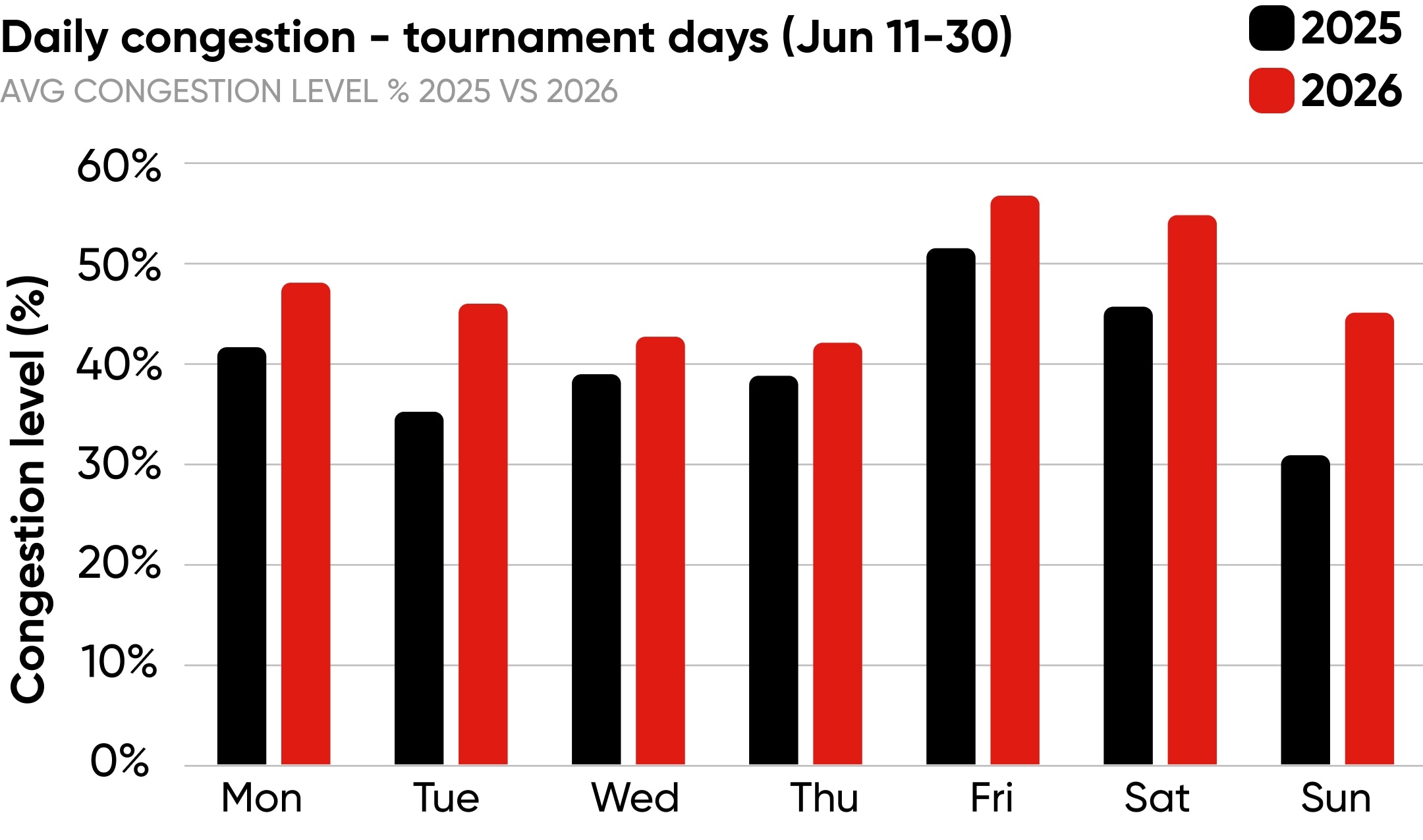
Sundays and Tuesdays emerged as the new pinch points. Sunday, historically the quietest day, started to behave like Wednesdays. Match schedules — especially Sunday kickoffs at SoFi Stadium — were pulling fans onto the roads earlier and in greater numbers. This suggests that traffic peaks are increasingly driven by tournament activity rather than traditional commuter patterns. The Week 27 dip, however, is misleading: the group stage ended on June 27, and Iran's camp disbanded on June 28, removing a significant source of daily cross-border demand.
Area of Interest #1: Otay Mesa Border Crossing (Tijuana-San Diego)
No crossing illustrates the tournament's impact more clearly than Otay Mesa.
Otay Mesa Port of Entry (Tijuana–San Diego) is one of the most strategic crossings on the U.S.–Mexico border, serving as Southern California’s primary commercial gateway and a critical node for North American supply chains. It handles most of the freight traffic between the San Diego–Tijuana region and the United States, supporting a dense binational manufacturing ecosystem.
In terms of commercial activity, Otay Mesa is generally ranked #2 on the U.S.–Mexico border for truck crossings (after Laredo) and among the top three ports by trade value. As one of the busiest commercial ports of entry on the border, it offers a real-time view into supply-chain resilience, border operations and large-scale mobility disruptions.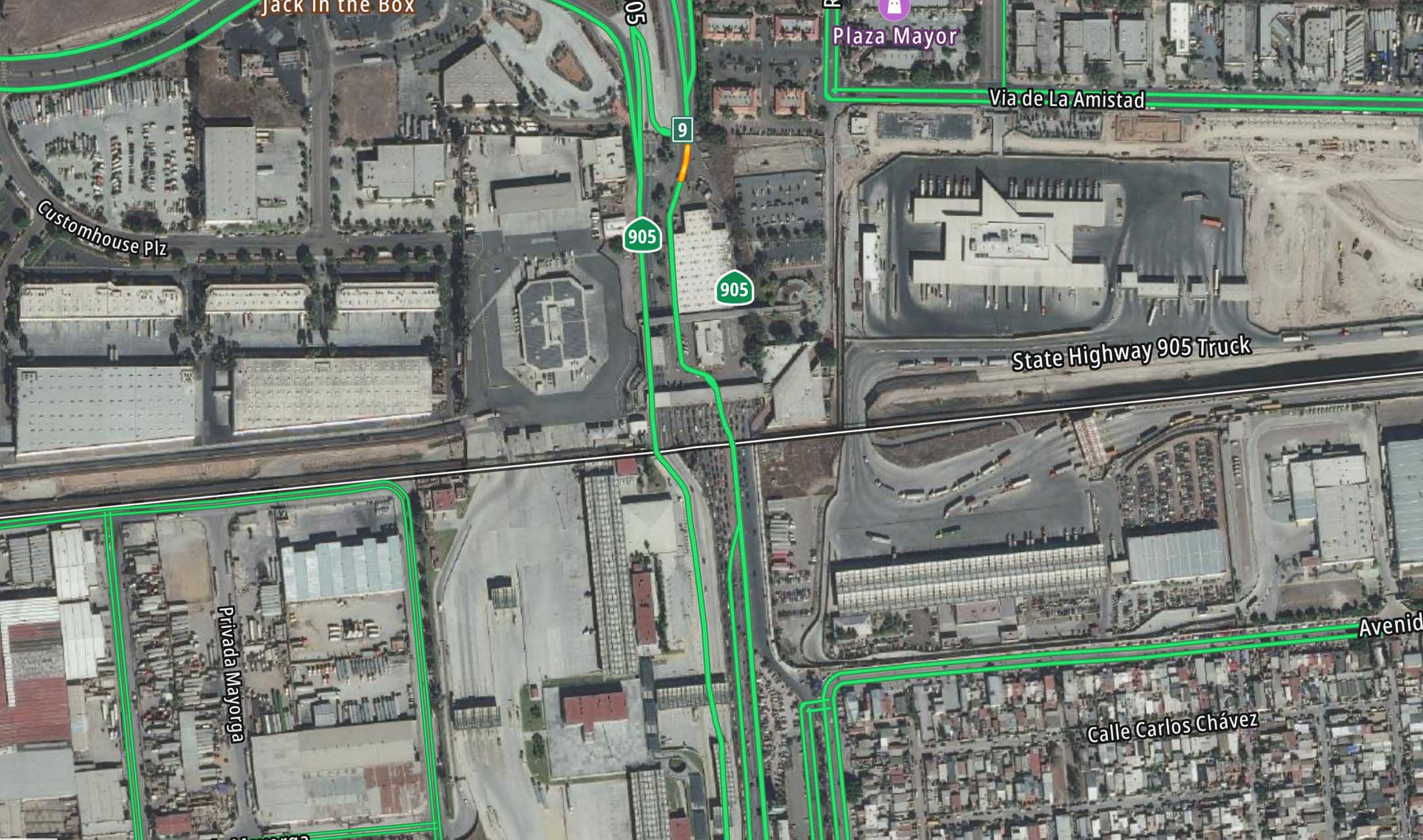
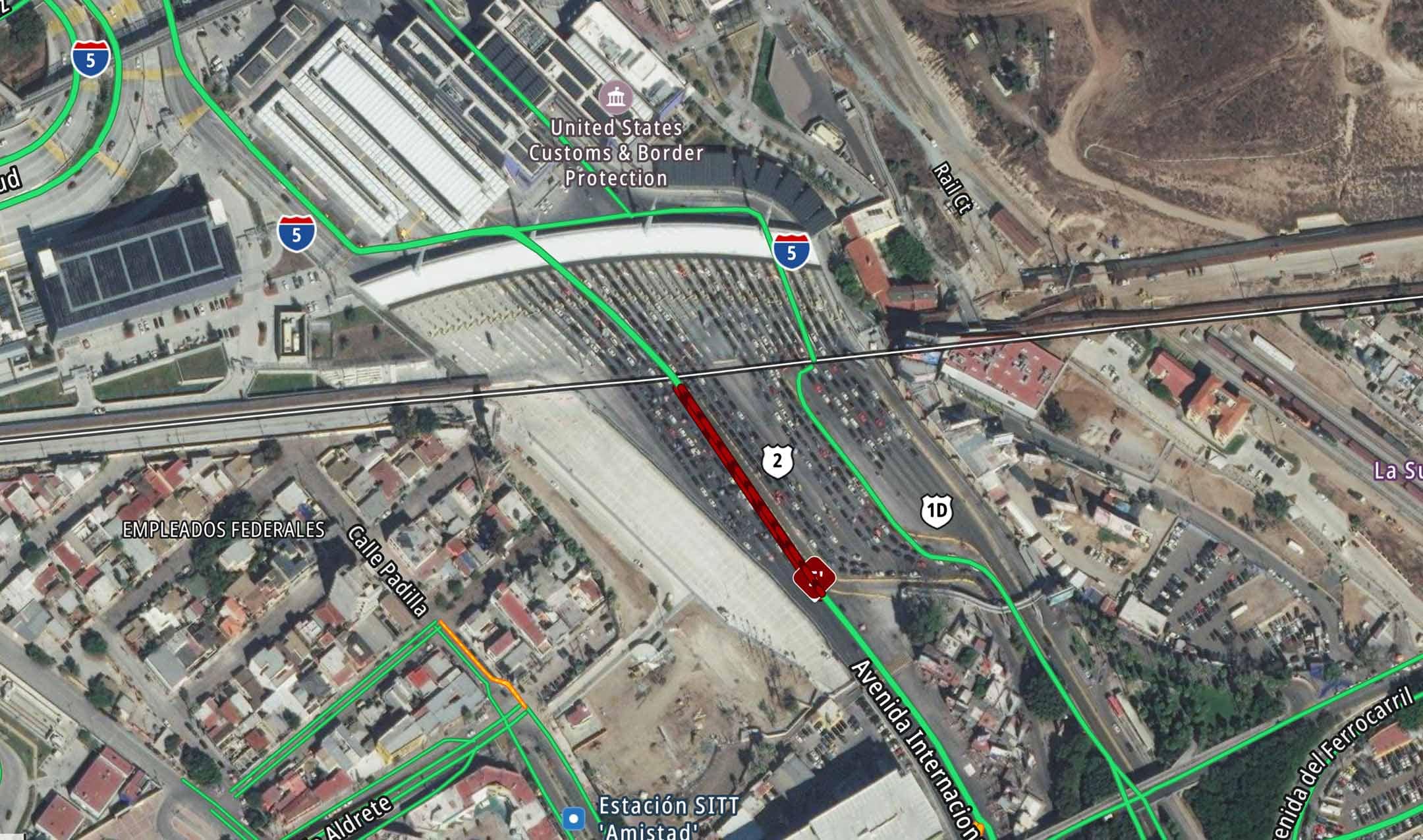
About 6 miles east of downtown Tijuana, Otay Mesa was the closest major crossing to Estadio Caliente and the Marriott Tijuana, Iran's hotel and training base. From June 11–30, its daily average congestion climbed to 58.4% from 42.5% (+37.3% YoY), while YTD January–June sits at +15.7%, meaning more than half of this year’s increase occurred in just three weeks.
The clearest signal came during the Belgium vs Iran match on Sunday, June 21. A June Sunday at Otay Mesa typically sits in the low 30s; in 2026 it hit 50.8%, a 54% jump as fans traveled early to Los Angeles, returned after the midday kickoff, and as the team convoy moved back to Tijuana that evening.
Notably, the biggest spikes often occurred around matches rather than during them.
Days around fixtures often peaked higher than match days, topping 66.3% on Wednesday, June 17, and 72.4% on Thursday, June 18, between Iran's first two games. By contrast, the Egypt vs Iran match in Seattle on June 26 barely moved Otay Mesa versus 2025, as travel demand shifted north and local commuting patterns eased.
The event pushed Otay Mesa to its highest June congestion on record in our data.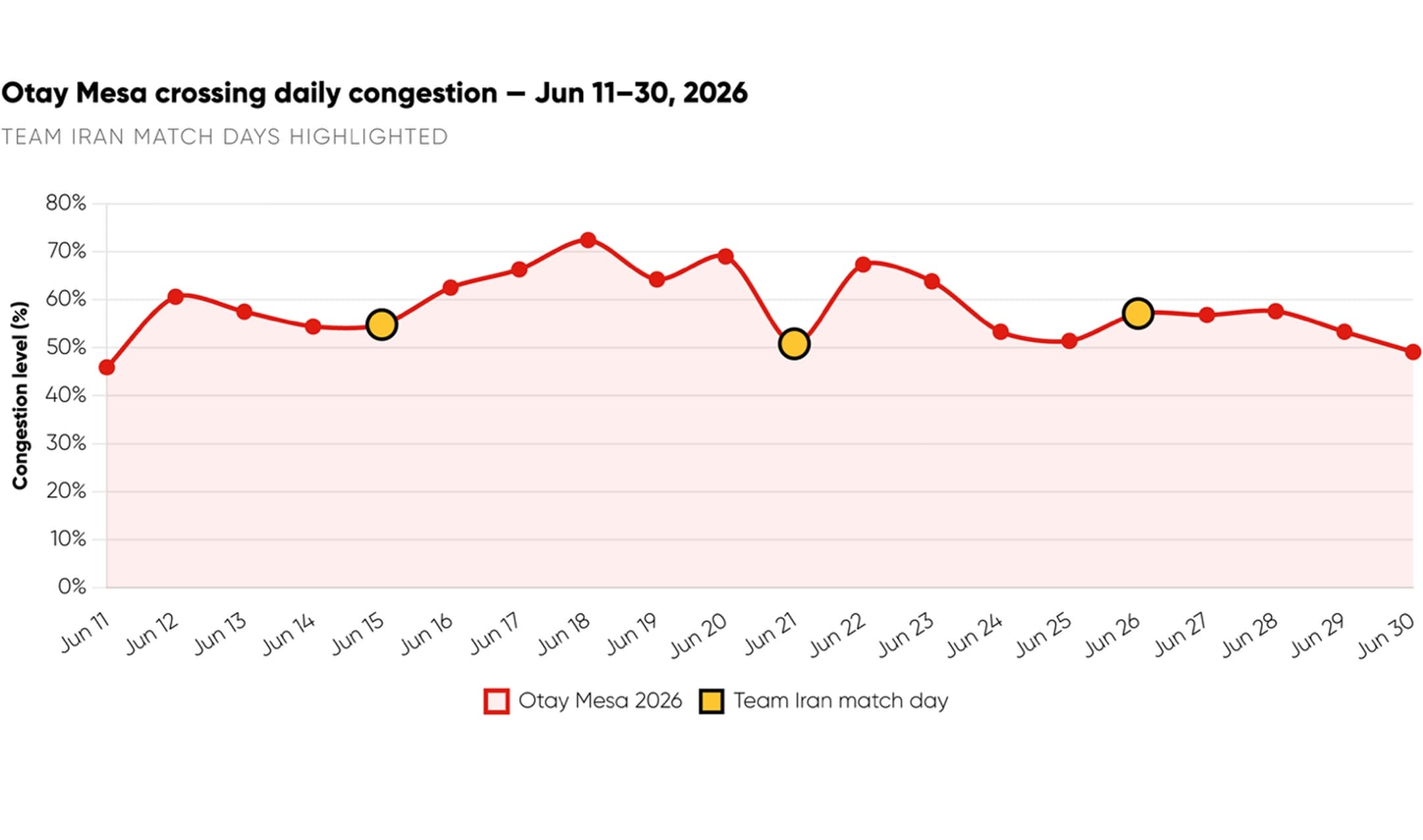
Area of Interest #2: Calexico – Mexicali Border Crossing
If Otay Mesa reflects the impact of team logistics, Calexico may provide the clearest signal of broader tournament-driven travel demand.
Calexico–Mexicali is a major binational gateway linking California’s Imperial Valley with Mexicali, the capital of Baja California and one of Mexico’s largest manufacturing hubs. The crossing is particularly important for agricultural, aerospace, electronics, and maquiladora supply chains, with all northbound truck traffic from Mexicali processed through Calexico East. Compared with other U.S.–Mexico crossings, Calexico ranks among the top tier of commercial freight and passenger gateways, though below giants such as Laredo, Otay Mesa, and San Ysidro.
From a mobility perspective, two patterns stand out:
traffic patterns closely reflect seasonal agricultural production and cross-border manufacturing activity
congestion and wait-time variations provide a strong proxy for regional supply-chain performance and cross-border labor mobility
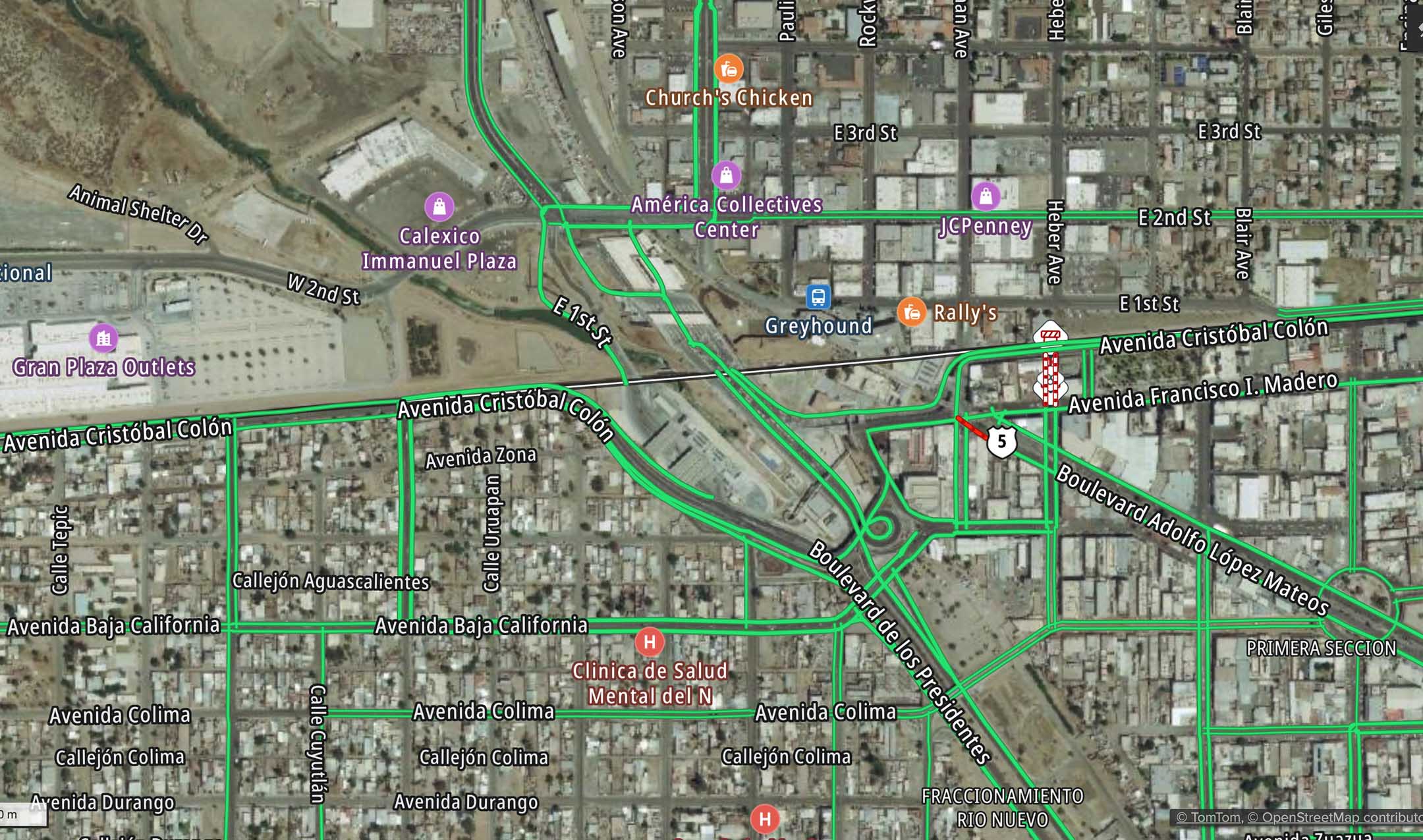
From June 11–30, Calexico's daily average congestion rose to 44.1% from 34.3% (+28.6% YoY), well above the YTD January–June +16.9%, signaling a clear tournament lift. Sundays more than doubled. The Sunday YoY of +106.6% is the largest weekday shift in the dataset, pointing to increased discretionary travel as fans and family groups moved between Mexicali and the Imperial Valley and onward to Los Angeles and SoFi Stadium.
On Sunday, June 21, Calexico reached 37.1% versus a June 2025 Sunday average of 23.4%, a 58.7% jump. This momentum held beyond key matches. Unlike Otay Mesa, which cooled after Iran left, Calexico's Week 27 was still +32.9% YoY, suggesting a broader, less team-specific Football World Championship 2026 effect. Calexico shows a genuine, sustained Football World Championship effect and best isolates the tournament tourism signal from Iran-specific movements. 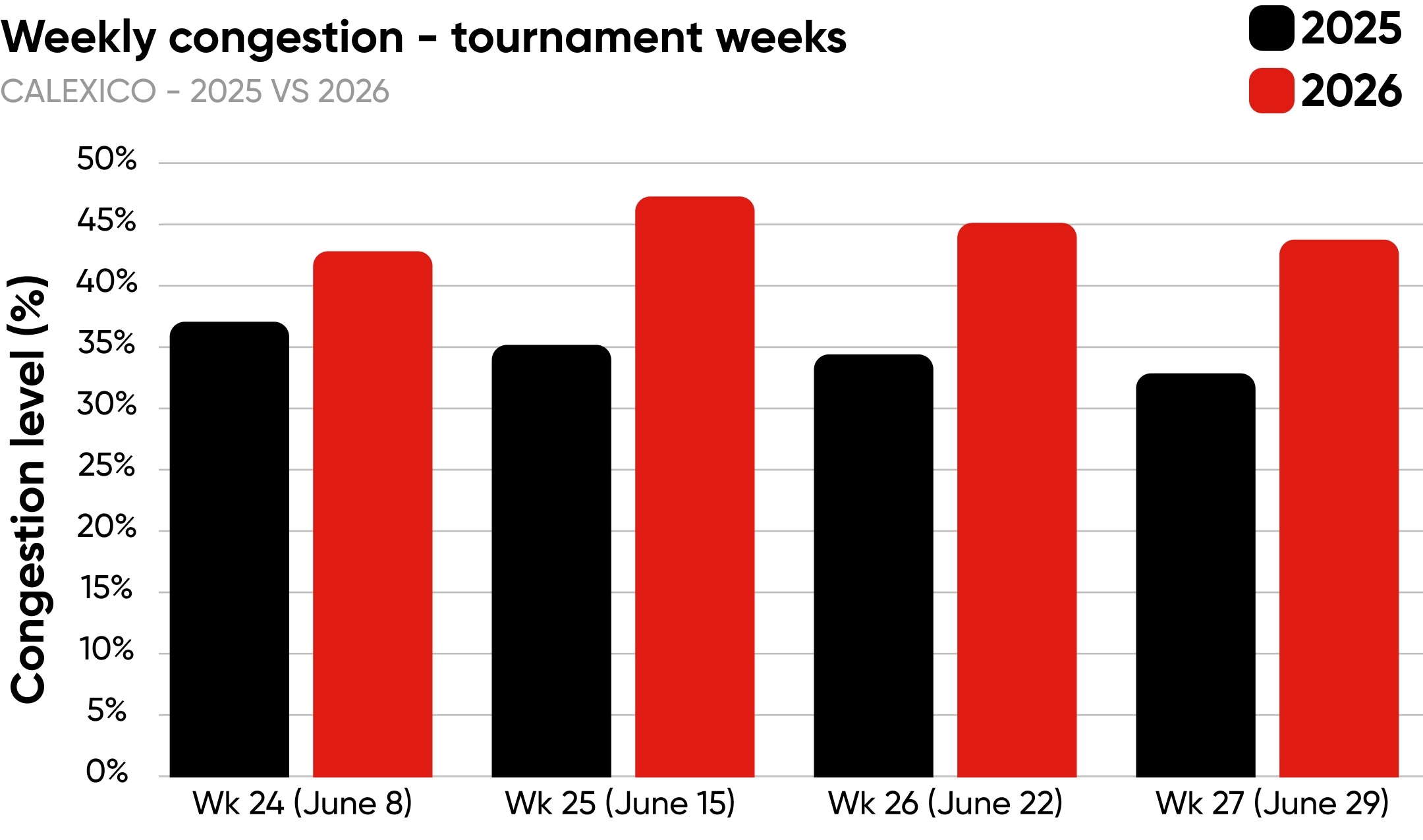
Conclusion
Across all six monitored crossings (Calexico, Otay Mesa, San Ysidro, Santa Teresa, El Paso and Laredo), the opening weeks of the Football World Championship 2026 revealed how major events can reshape mobility far beyond their host venues. Aggregate congestion rose by 15–17% year over year, with Otay Mesa emerging as the standout hotspot, posting a 37% increase in daily average congestion from June 11–30. Sundays saw the sharpest shifts, with congestion up 46% overall, 66% at Otay Mesa and 107% at Calexico.
More broadly, the data show that a global sports event can act as a temporary stress test for border mobility systems. Even when matches take place far from the crossing itself, fan movements, team logistics and wider regional activity can shift established traffic patterns, create new peak days and place additional pressure on strategic road corridors. For mobility planners, border control forces, emergency services, law enforcement and defense-adjacent operators, this underlines the need for timely, location-based intelligence to anticipate demand, allocate resources and maintain operational resilience during major events.
TomTom for Defense and Government
TomTom provides location analytics solutions for Defense and Government through the Orbis Global Basemap, Traffic Data and routing solutions.
We address and integrate a wide range of use-cases, supporting C4ISR and GEOINT systems:
Military mobility,
ISR,
Military planning,
Crisis and emergency response, evacuation data
TomTom’s proven, defence-ready solutions provide decision-critical context via continuously updated, globally consistent data and real-time intel fusion.
* Required field. By submitting your contact details to TomTom, you agree that we can contact you about marketing offers, newsletters, or to invite you to webinars and events. We could further personalize the content that you receive via cookies. You can unsubscribe at any time by the link included in our emails. Review our privacy policy. You can also browse our newsletter archive here.